The Neuroscience of the Stage: Inside the Mind of a Dancer in Full Flight
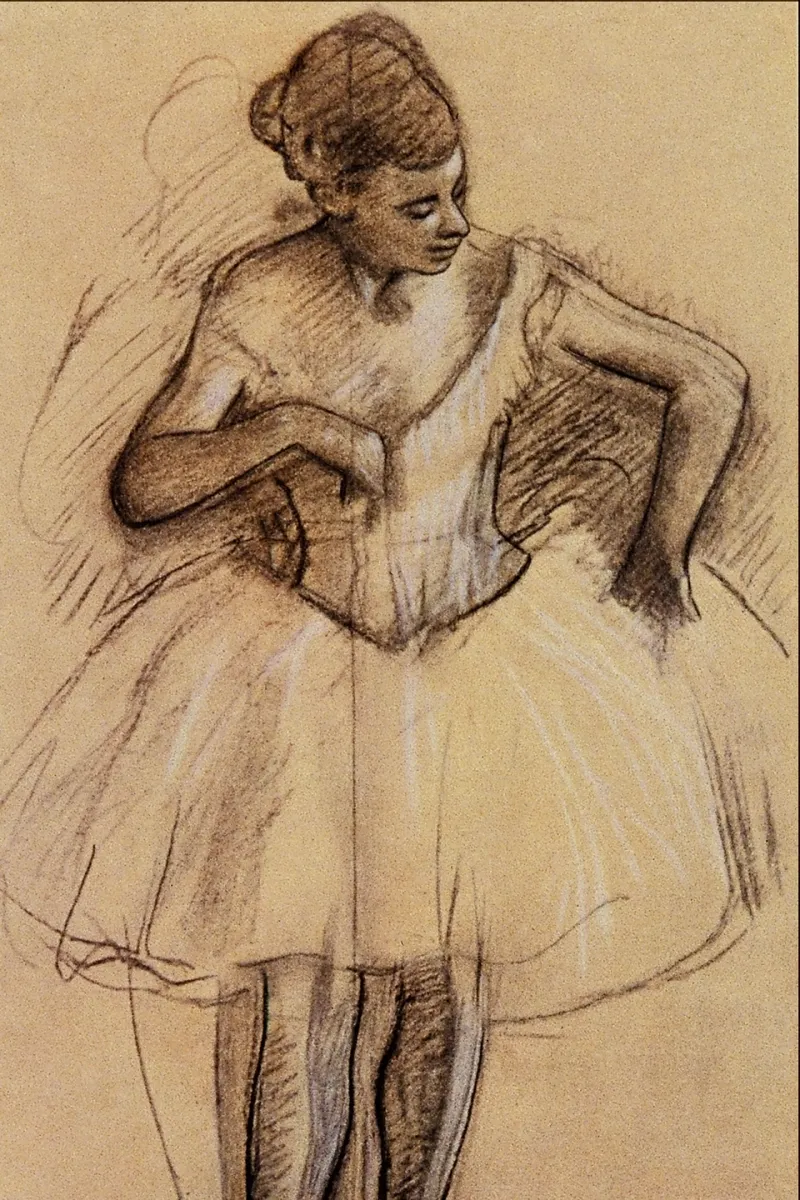
Photo: Edgar Degas, Public domain, via Wikimedia Commons
There is a moment that every serious dancer knows — and yet struggles to describe. The music begins, the lights shift, and something changes. The body no longer waits for instruction. Movement arrives before thought, and the stage transforms from a place of performance into something more like a conversation between the self and the ineffable. Scientists call this phenomenon "flow state." Dancers, more often than not, simply call it the reason they do what they do.
At Raiin Dance Theater, we have spent considerable time exploring what it means for movement to carry genuine meaning. That exploration has led us, inevitably, to a question that is as much scientific as it is artistic: what is actually happening inside the performer's mind and nervous system when those transcendent moments occur?
The Psychology Behind the Perfect Performance
The concept of flow was first formalized by Hungarian-American psychologist Mihaly Csikszentmihalyi in the 1970s, who described it as a state of complete absorption in a challenging activity — one where skill and demand are so precisely balanced that conscious self-monitoring disappears entirely. For dancers, this framework resonates with striking accuracy.
Dr. Lavinia Shores, a cognitive neuroscientist who has collaborated with several professional dance companies across the United States, explains it this way: "When a dancer enters flow, the prefrontal cortex — the region most associated with self-criticism, planning, and executive decision-making — becomes temporarily less active. What we observe is a kind of productive quieting of the inner critic. The body draws on deeply encoded motor memory, and the result is movement that feels both spontaneous and precisely right."
This neurological phenomenon, sometimes referred to as transient hypofrontality, is not unique to dancers. Athletes, musicians, and surgeons have all reported similar experiences. But in dance, where the body itself is the instrument and the stage is the canvas, the stakes and the sensations are uniquely heightened.
Building the Conditions for Flow
Flow does not arrive on demand. Experienced performers understand this with a clarity that borders on philosophy. The state must be cultivated, coaxed into existence through a combination of rigorous preparation, deliberate mental conditioning, and the willingness to release control at precisely the right moment.
Marcellus Dayne, a principal dancer with a nationally recognized contemporary company based in New York City, describes his pre-performance ritual as a kind of architecture. "I spend the hour before I go on stage building the room that flow will eventually walk into," he says. "That means warming up in a very specific sequence, listening to certain music, and doing what I call 'intention setting' — where I identify the emotional core of each piece I'm performing and let that core settle into my body rather than my head."
Choreographers play an equally significant role in creating the conditions under which flow becomes possible. When the structure of a work is deeply internalized — when the choreography has moved from conscious memory into something more like instinct — the performer is freed to inhabit the movement rather than execute it. This distinction, subtle as it may sound, is everything.
"I design my work with what I think of as breath room," says choreographer Nadia Voss, whose pieces have been performed at venues from Chicago to Los Angeles. "There are moments of technical precision, yes, but there are also passages where the dancer has latitude — where the phrasing can expand or contract depending on what the body is telling them that night. Those passages are where flow most often appears."
The Role of the Ensemble
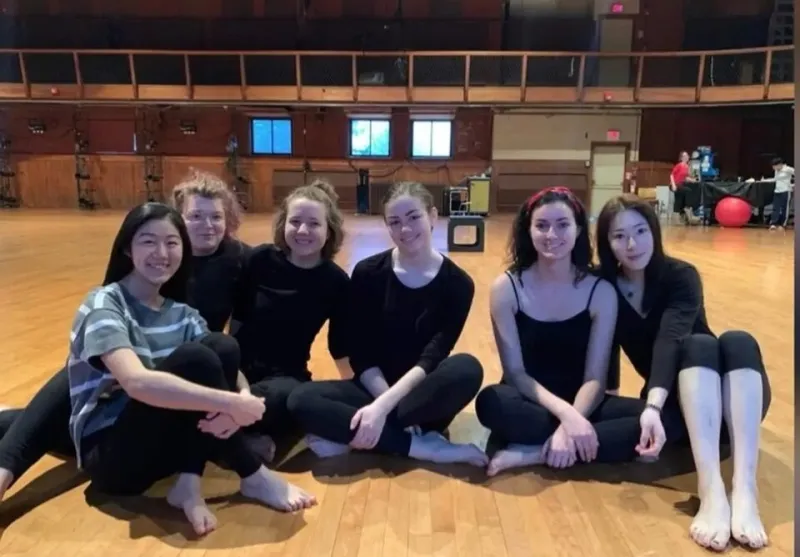
While much of the conversation around flow focuses on the individual performer, the phenomenon takes on a remarkable additional dimension in ensemble work. Researchers studying group flow — the synchronized absorption of multiple performers in a shared creative act — have found that it produces measurable physiological synchrony. Heart rates align. Breathing patterns converge. The nervous systems of multiple human beings begin, in a very real sense, to operate as a single organism.
This is something that dancers in repertory companies often speak about with an almost reverential quality. "There are performances where you can feel the entire company breathing together," says Dayne. "You're not thinking about the person next to you — you're not thinking at all, really — but somehow everyone is making the same choices at the same instant. That's when the work becomes something bigger than any of us."
For audiences, this collective flow state is perceptible even without a neuroscientific vocabulary to describe it. It is the difference between watching skilled technicians execute a sequence and witnessing something that feels genuinely alive.
Cultivating Flow Through Training
The practical implications of flow research are beginning to influence how dance training is structured at the professional level. Rather than emphasizing repetition alone, forward-thinking educators are incorporating mindfulness practices, somatic awareness training, and even biofeedback technology into their curricula.
Some conservatories have begun working with sports psychologists who specialize in peak performance states, borrowing frameworks developed for elite athletes and adapting them for the specific demands of theatrical performance. The goal is not to manufacture flow artificially, but to remove the internal obstacles — anxiety, self-consciousness, fear of failure — that most reliably prevent it from emerging naturally.
"The irony of flow is that you can't chase it directly," notes Dr. Shores. "The harder a performer tries to achieve it, the more elusive it becomes. What training can do is lower the threshold — make the conditions under which flow is possible more accessible, more frequent, more sustainable across an entire performance run."
When Movement Becomes Meaning
At its deepest level, the science of flow in dance is a story about what happens when human beings push the boundaries of their physical and psychological capacities in service of something that matters to them. The neurological mechanisms are real, the research is compelling, and the practical applications are growing more sophisticated every year.
But the dancers themselves often return to a simpler truth. Flow is not merely a performance state to be optimized. It is, for many, the primary reason that the discipline of dance commands such profound commitment over the course of a lifetime. It is the moment when all the hours of training, all the physical sacrifice, all the creative searching converge into something that transcends technique entirely.
At Raiin Dance Theater, we believe that understanding these moments — scientifically, artistically, and humanly — is part of what it means to take the performing arts seriously. The stage is not merely a platform. It is, at its best, a laboratory for some of the most extraordinary things the human mind and body are capable of together.