The Sixth Performer: Why the Audience Deserves a Review of Its Own
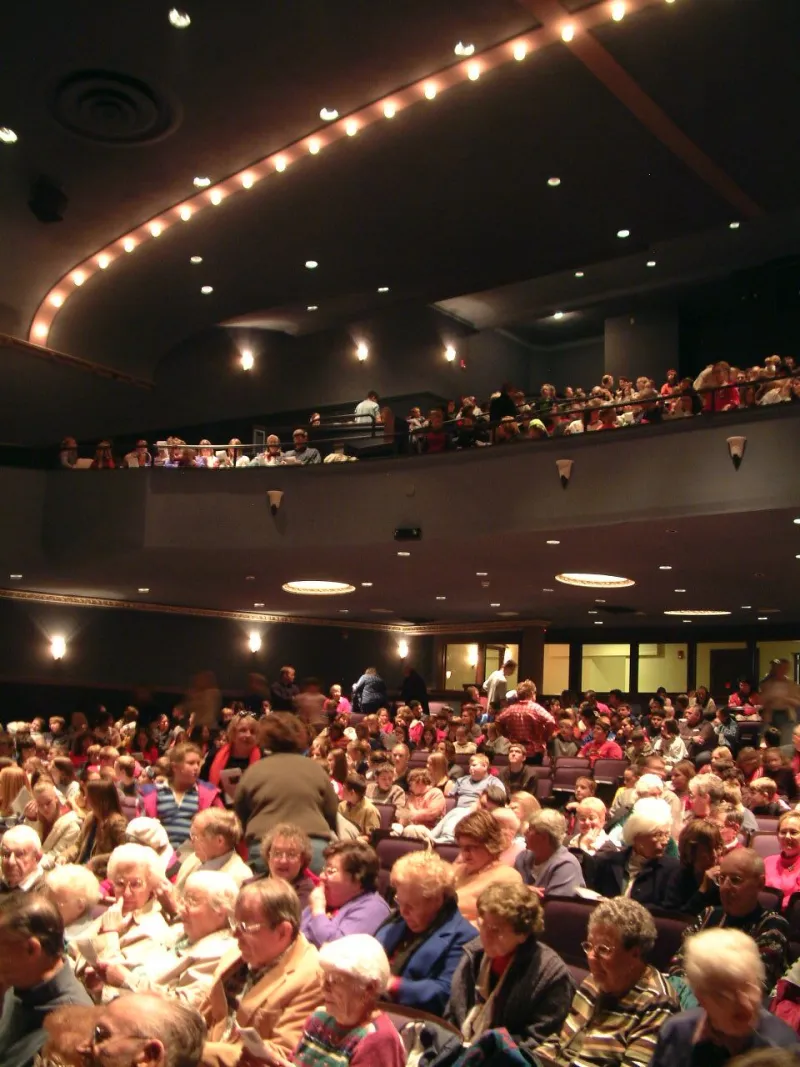
We review the choreography, the lighting, the cello solo in Act Two—yet never the collective organism breathing in the rows behind us. It is time the house received its own critique.
Where Movement Becomes Meaning
We review the choreography, the lighting, the cello solo in Act Two—yet never the collective organism breathing in the rows behind us. It is time the house received its own critique.
The lobby was once a corridor with a coat rack and a cash bar. Increasingly, it is a threshold—designed to convert strangers into a community before the first step is taken onstage.
Every leap a dancer takes ends in a landing, and every landing ends somewhere. We follow the floor builders, physical therapists, and company managers whose invisible decisions determine whether that somewhere is safe.
Behind every seamless performance lies a second, unseen workday. We followed dancers in Chicago, Austin, and Philadelphia through the jobs that keep American dance alive — and discovered what the gig economy gives and takes from the art form.
Conventional wisdom says the best seat is the closest one. A case, drawn from perceptual science and choreographers' own studio practices, that the back row sees what the front row never can: the whole design.
The matinee is treated as theater's consolation prize — a stripped-down performance for a quieter crowd. It shouldn't be. The 2 PM slot may be the most democratic hour in American performing arts, and regional theaters that treat it as second-class are squandering their broadest audience.
Every theater has its ghosts — the familiar faces in the same seats, season after season, decade after decade. We spent an evening among the superfans who turn a dance company into a community.
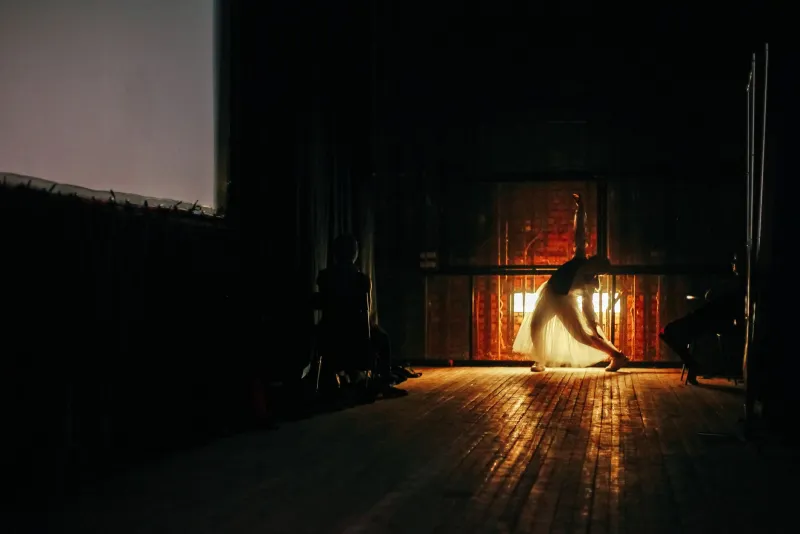
Long before the house lights fade, a theater is already performing. From wardrobe triage to the stage manager's final count, the last ten minutes before curtain run on precision most audiences will never witness.
Your $45 ticket is not paying for the performance — it's subsidizing a small fraction of it. A frank look at the broken economics of mid-size American dance theaters, and the funding models that might finally let them breathe.
Accessibility in the performing arts has too long been treated as an afterthought—a compliance matter resolved by installing a ramp and printing a program in large type. A new generation of American dance companies is dismantling that framework entirely, building productions from the ground up with the full spectrum of human perception in mind. The result is work that does not merely accommodate disabled audiences but is genuinely transformed by their presence.
The most technically flawless performance can still feel curiously empty—and many choreographers are beginning to understand why. A growing body of evidence from the studio floor suggests that prescriptive instruction, however well-intentioned, can strip a dancer of the very quality that makes movement matter. This piece examines the counterintuitive discipline of creative surrender and what it produces when practiced deliberately.
For most of dance theater's history, the musical score has occupied a subordinate position—composed to serve choreography, timed to reinforce movement, adjusted when the dancing required it. A small but significant number of American companies are now dismantling that hierarchy, placing composers and choreographers in genuine creative partnership rather than employer-and-contractor relationships. What they are discovering is changing the nature of what dance theater can be.

Understudy dancers occupy one of the performing arts' most psychologically demanding positions — mastering every nuance of a role they may never perform, then delivering it flawlessly on hours of notice. This examination of their world reveals a discipline that is as much about mental architecture as it is about physical preparation.
Beyond the rehearsal studio and the performance stage, many professional dancers maintain a deeply private practice: the written record of a body in motion. From movement notation scrawled in margins to poetry composed after midnight, these documents reveal how dancers process, interrogate, and ultimately deepen their relationship with their own craft.
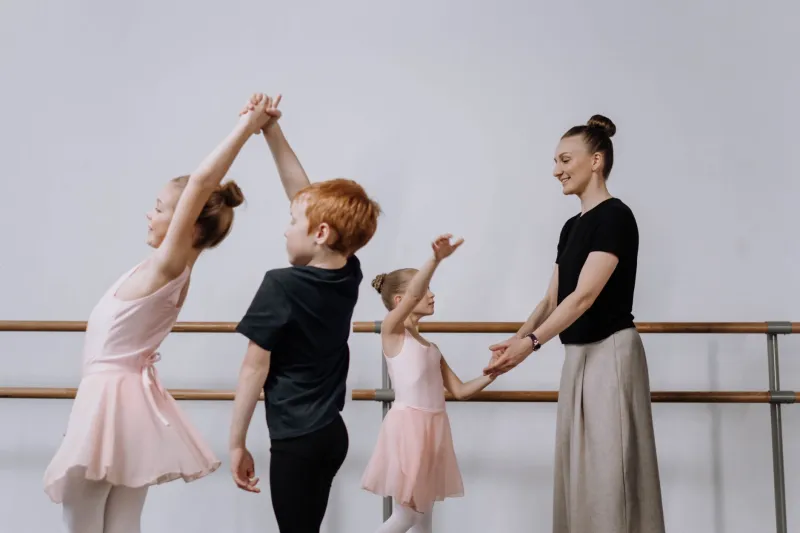
Long before a dancer steps into a spotlight, the studio has already begun teaching lessons that have nothing to do with technique. Choreographers and performers across the country are articulating what those inside the art form have long understood: that dance training quietly builds a set of human competencies that outlast any single performance. The conversation is now reaching well beyond the arts community.
The seconds before a dancer moves and the music sounds are rarely treated as part of the performance itself — yet they may be its most consequential component. From pre-curtain rituals backstage to the deliberate engineering of darkness and hush in the house, choreographers and venue directors are increasingly recognizing that anticipation is not merely a byproduct of theater — it is a craft. This examination explores how the architecture of the pre-performance moment conditions the mind, the bo
For professional dancers, the question is rarely whether the performing years will end — it is whether they have prepared for what comes next. A growing number of artists are discovering that the body's gradual withdrawal from peak performance is not an ending but an invitation to inhabit dance in entirely new ways. From the rehearsal studio to the boardroom, the second chapter of a dancer's career is quietly becoming one of the field's most compelling stories.
Streaming platforms have placed world-class choreography within reach of virtually any American with an internet connection, yet something irreducible slips through the pixels. This article examines the widening tension between digital accessibility and the irreplaceable alchemy of shared physical presence—and asks what responsibility venues bear in an era of on-demand performance.
For decades, the path to artistic legitimacy in American dance ran through a handful of New York institutions. A growing number of mid-sized regional theaters are dismantling that geography of power, building new pipelines that elevate underrepresented choreographers and challenge the assumptions that have long governed who gets to make meaningful work.
In an art form defined by perpetual motion, a growing number of choreographers are discovering that the most powerful moments on stage are those in which nothing moves at all. The deliberate pause, the held breath, the body suspended between impulses — these are not absences of dance but its most concentrated expressions. Raiin Dance Theater examines how strategic stillness is reshaping the science and philosophy of contemporary performance.