Before the First Note: How the Silence Before a Performance Shapes Everything That Follows
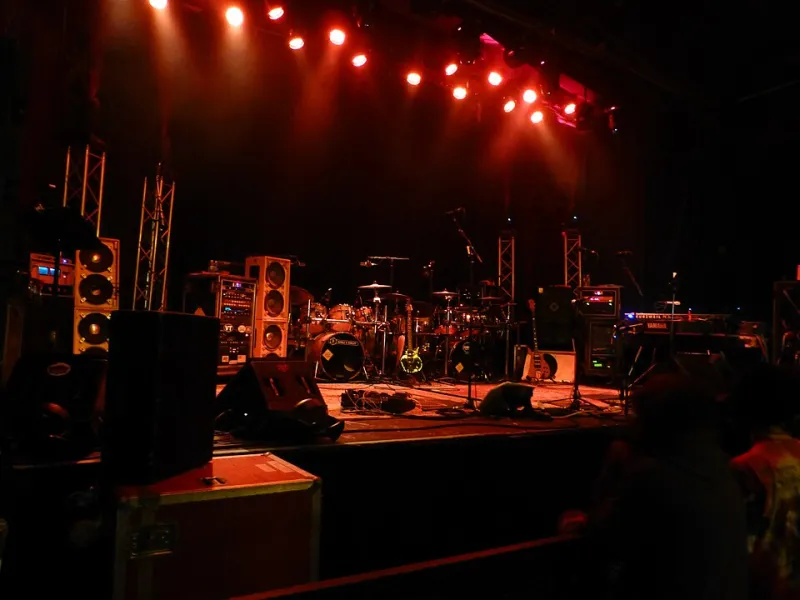
Photo: cp_thornton from Cleveland, Ohio, USA, CC BY 2.0, via Wikimedia Commons
There is a particular quality to the silence inside a theater in the moments just before a performance begins. The house lights dim incrementally. The murmur of the audience tapers, then vanishes. The curtain holds. In that suspended interval — a breath that the entire room seems to take collectively and then refuse to release — something fundamental is already happening. The performance, it turns out, has already started.
For decades, the study of dance and theatrical production has focused its analytical energy on what is visible: the choreography, the costuming, the musicality, the spatial relationships between bodies. But a growing body of inquiry within performance science is redirecting attention toward the threshold moment — that charged, pre-kinetic interval when nothing has yet occurred and everything is nonetheless in motion.
The Neuroscience of Waiting
Anticipation is not a passive state. Neurologically, the experience of waiting for a known but not-yet-arrived stimulus triggers the brain's dopaminergic reward circuitry in ways that closely mirror the experience of the stimulus itself. Research in predictive processing — the cognitive framework that describes how the brain constantly generates expectations about incoming sensory information — suggests that what an audience anticipates shapes what it perceives. The pre-performance silence, in this sense, is not empty. It is generative.
When a theater dims its lights deliberately and slowly, rather than cutting to black abruptly, it invites the audience's nervous system into a particular register. Heart rates modulate. Peripheral awareness narrows. The scattered, multidirectional attention of everyday social life begins to consolidate toward the stage. Choreographers and directors who understand this process are not simply managing logistics — they are conducting the audience's neurology before the first dancer appears.
Leading production designers in American contemporary dance have increasingly acknowledged this reality in their staging decisions. The choice of how long to hold darkness before a performer enters, whether to allow ambient sound to persist or to enforce absolute quiet, whether the curtain rises slowly or snaps open — none of these are neutral decisions. Each one modulates the psychological state of every person in the house.
The Ritual Life of the Backstage
The pre-performance interval is equally consequential for the performers themselves, though through an entirely different mechanism. Where the audience is being drawn inward and forward — toward attention and receptivity — the dancer backstage is undergoing a parallel but inverse process: a narrowing of focus, a calibration of the body, and a deliberate management of the nervous system's arousal state.
Pre-performance rituals among professional dancers range from the highly idiosyncratic to the collectively choreographed. Some companies observe enforced silence in the wings during the final minutes before curtain. Others engage in synchronized breathing exercises, physical warm-up sequences that double as psychological anchoring, or spoken affirmations shared among cast members. What unifies these practices, regardless of their outward form, is their function: they create a boundary between ordinary embodied existence and the heightened, purposeful state required for performance.
Sports psychologists have long studied the role of pre-competition ritual in regulating performance anxiety and focusing attention. The performing arts have been slower to formalize this knowledge, but the practical wisdom of experienced dancers has always understood it intuitively. The ritual is not superstition. It is preparation of the instrument.
For choreographers who work closely with their companies over extended periods, the design of pre-performance ritual has become an extension of the choreographic process itself. The question is not merely what the dancers will do on stage, but what conditions will allow them to do it fully — and those conditions must be cultivated in the minutes and hours that precede the curtain.
Staging the Threshold
Venue architecture plays a role in this preparation that is rarely examined in public-facing discourse about dance. The physical design of a theater — the length of its entry corridors, the acoustic properties of its lobby, the transition from ambient noise to enforced quiet as patrons find their seats — functions as a decompression chamber between the outside world and the performance space.
Some of the most thoughtful venue directors in the United States have begun treating the patron's journey from street to seat as a designed experience rather than a logistical formality. The goal is not merely to move bodies from one space to another, but to shift the psychological mode of those bodies — from the diffuse, reactive attention of public life to the concentrated, receptive attention that deep engagement with live performance requires.
Programming choices in the pre-show period extend this logic further. The selection of pre-curtain music, or the decision to offer silence instead, communicates something about the nature of the experience to come. A venue that greets its audience with ambient electronic sound before a contemporary dance program is making a different claim than one that allows the acoustic hush of an empty theater to do the work. Neither choice is inherently superior, but both are choices — and the best venues make them consciously.
Darkness as Design Element
The use of darkness in pre-performance staging deserves particular consideration. In the Western theatrical tradition, darkness has historically functioned as a simple signal: the performance is about to begin. But in the hands of choreographers and lighting designers who think carefully about the full arc of an audience's experience, darkness becomes something more complex.
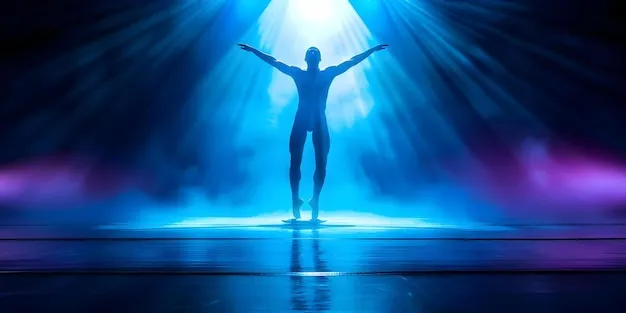
A stage held in complete blackness for ten or fifteen seconds before the first cue fires is not merely a technical pause. It is an invitation to a specific quality of attention — one that is alert but undirected, open but concentrated. The visual cortex, deprived of information, becomes hyperattentive to the first stimulus it receives. When that stimulus is a dancer's body crossing into a single shaft of light, the impact is amplified by the darkness that preceded it.
This is the architecture of anticipation: a set of deliberate choices about time, sound, light, and space that prepares both the performer and the audience for the full weight of what is about to occur. It is, in the most precise sense, part of the performance — not a prologue to it.
The First Moment Is Never the First Moment
For audiences who attend live dance regularly, the recognition of this principle can transform the experience of attending a performance. The work begins not when the music sounds or when the first dancer enters, but when the house lights begin their slow descent. Every sensation in that interval — the rustle of a program, the cooling of the air, the gradual hush of the crowd — is part of the composition.
For the performing arts community broadly, this understanding carries a practical imperative. If the pre-performance interval shapes what follows, then it deserves the same intentionality that choreographers bring to every other element of their craft. The silence before the music is not nothing. It is, perhaps, everything — the moment when the audience's readiness and the dancer's preparation converge, and the possibility of genuine encounter is either created or foreclosed.
At its most essential, live performance is an act of shared presence. That presence does not begin with movement. It begins in the dark, in the held breath, in the charged and waiting air.