After the Spotlight: Reimagining a Dance Career That Outlasts the Stage
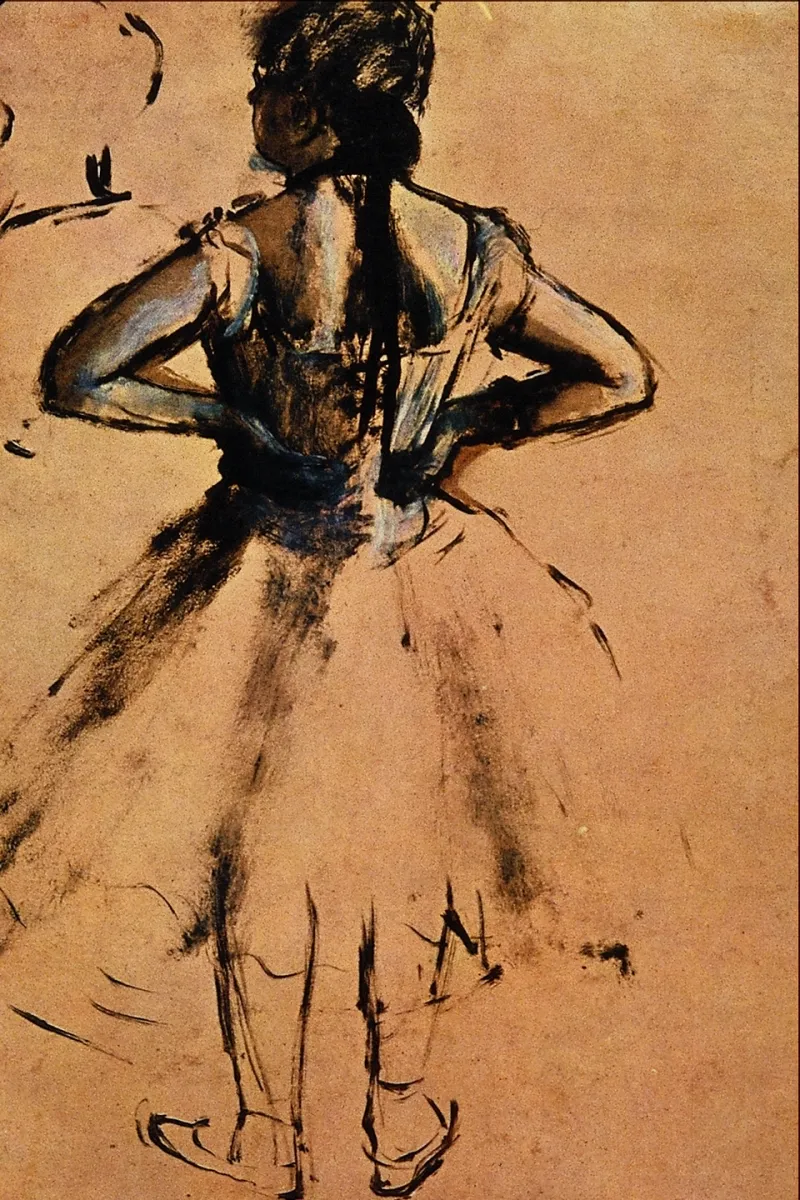
Photo: Edgar Degas, Public domain, via Wikimedia Commons
There is a particular kind of silence that follows a dancer's final performance — not the silence of an empty theater, but the internal quiet of a body that has given everything it has to give at the highest level and must now find a different way to speak. For decades, that silence was treated as an ending. Today, a growing community of artists, educators, and arts administrators is insisting it be treated as a beginning.
The professional dance world has long operated under an unforgiving arithmetic. Careers that begin in childhood training often reach their competitive peak in a performer's mid-twenties, and the physical demands of company life — repetitive stress, injury accumulation, the relentless pressure to maintain peak conditioning — mean that many dancers are navigating the transition out of full-time performance by their mid-thirties, sometimes earlier. In an industry where the average annual salary for a professional dancer hovers below $40,000, the economic stakes of that transition could not be higher.
Yet something has shifted in how the dance community is choosing to face this reality. Rather than treating career transition as a crisis to be managed, a new generation of artists is approaching it as a creative problem to be solved — and the solutions they are finding are reshaping the institutional landscape of American dance.
The Architecture of a Second Chapter
The most visible pathway beyond performance has always been teaching, and for good reason. The embodied knowledge that accumulates over years of professional training is extraordinarily difficult to transmit through any medium other than direct physical instruction. A former soloist who spent a decade refining the mechanics of a pirouette carries information in her nervous system that no textbook can replicate. Studios, conservatories, and university dance programs across the country are increasingly recognizing this, actively recruiting retired performers for faculty positions that prize experiential authority alongside academic credentials.
But teaching is only one thread in what has become a much richer tapestry. Choreography — once considered the exclusive province of a select few visionaries — has emerged as a natural extension for performers whose years of stage experience have given them an intimate understanding of how movement communicates meaning to an audience. Many dancers report that the shift from interpreting another choreographer's vision to generating their own feels less like a departure than a deepening: the same instincts that guided their bodies through performance now guide the bodies of others through space and time.
Artistic direction represents a further evolution, one that demands not only creative vision but organizational fluency. Former performers who have moved into leadership roles at regional companies and presenting organizations frequently describe the transition as a kind of translation — learning to apply the discipline and collaborative intelligence cultivated on stage to the challenges of budgets, board relationships, and institutional strategy. It is demanding work, but it is work that draws directly on the relational and improvisational capacities that dance training develops in abundance.
The Entrepreneurial Turn
Perhaps the most striking development of the past decade is the emergence of the dancer-entrepreneur. Across American cities, former company members are launching independent ventures that extend far beyond the traditional boundaries of the art form: wellness studios that integrate somatic movement practices into therapeutic contexts, production companies that create immersive performance experiences for corporate clients, digital platforms that bring dance education to communities without access to professional instruction.
This entrepreneurial energy reflects both necessity and opportunity. Necessity, because the institutional infrastructure of American dance has never been large enough to absorb every talented artist who ages out of performing. Opportunity, because the skills that professional dance training instills — physical intelligence, spatial awareness, the capacity to communicate without words, an almost preternatural ability to read a room — turn out to be genuinely valuable in a wide range of contexts that have nothing to do with a stage.
Some artists have found their second chapters in adjacent creative industries: film and television choreography, movement direction for theatrical productions, physical therapy and dance medicine, arts administration and grant-making. Others have built careers as somatic educators, working with athletes, executives, and trauma survivors who benefit from the kind of embodied self-awareness that dancers develop over years of rigorous training.
Planning for Multiplicity
What distinguishes the dancers who navigate these transitions most successfully is not luck or exceptional talent — it is intentionality. The artists who build durable second careers are, almost without exception, the ones who began thinking about those careers before the transition became urgent. They pursued supplementary training while still performing. They cultivated relationships outside their immediate company environments. They treated the skills they were developing as performers not as ends in themselves but as foundations for something larger.
For emerging artists currently in the early stages of their performing careers, this is perhaps the most practical lesson the field's second-act pioneers have to offer: your career is not a single arc but a series of overlapping chapters, and the wisest investment you can make in your future is to begin writing the next chapter before you have finished the current one.
This does not mean abandoning the present moment — presence, after all, is the essential discipline of the performing artist. It means holding the present and the future simultaneously, with the same quality of attention that a skilled dancer brings to the relationship between the beat and the body: fully committed to what is happening now, while remaining exquisitely aware of what is coming next.
What the Field Owes Its Artists
The conversation about dance career longevity is not solely the responsibility of individual performers. Companies, presenting organizations, and funding bodies share an obligation to create conditions in which artists can plan thoughtfully for professional lives that extend beyond peak performance years. That means offering transition support programs, facilitating mentorship between retiring performers and emerging ones, and recognizing that the institutional knowledge held by experienced artists is a cultural resource worth investing in.
A theater that genuinely believes in the value of what its artists create must also believe in the value of those artists as whole human beings — people with decades of creative contribution still ahead of them, even after the curtain has fallen on their performing years. The dance world's most enduring institutions are the ones that have understood this, building cultures in which the transition from performer to teacher, choreographer, director, or entrepreneur is treated not as a loss but as a continuation of the same essential work: the work of ensuring that movement keeps making meaning, in every season of a life devoted to the art.
The spotlight may narrow over time. But the stage, for those who know how to find it, never truly disappears.