The Living Room and the Theater: What Dance Loses When the Screen Becomes the Stage
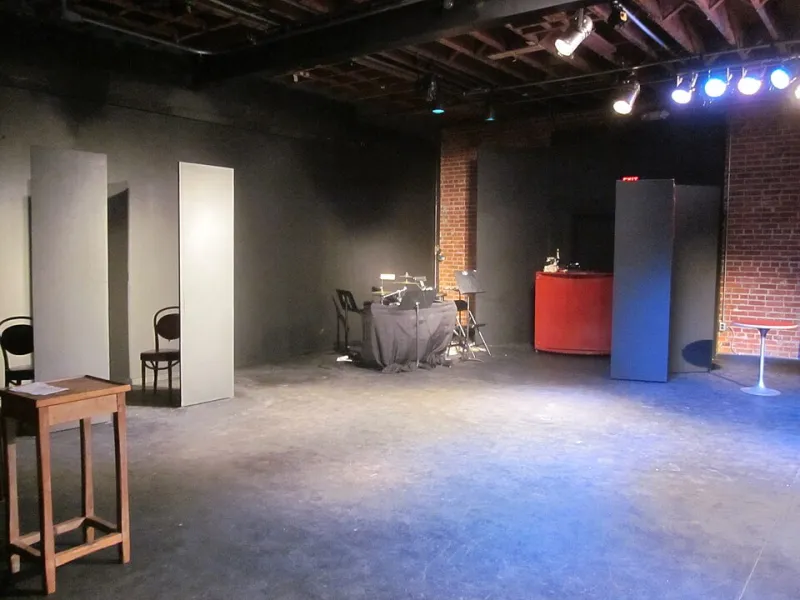
Photo: Infrogmation of New Orleans, CC BY-SA 3.0, via Wikimedia Commons
There is a moment in live dance performance—specific, fleeting, almost impossible to name—when the breath of an audience synchronizes with the breath of a dancer. It happens without coordination, without instruction. It is, in the truest sense, a biological event: bodies in proximity responding to bodies in motion. No streaming service has yet found a way to transmit it.
This is not a nostalgic complaint. The expansion of dance through digital platforms represents one of the most significant democratizing shifts in the art form's American history. Platforms such as The Shed's digital archive, Marquee TV, and PBS's Great Performances have placed technically rigorous, culturally rich choreography before audiences in rural Kansas, suburban Mississippi, and underserved urban neighborhoods alike—communities that geography, cost, or physical ability might otherwise have excluded entirely. That achievement deserves genuine recognition.
And yet the theater community finds itself navigating an uncomfortable paradox: the very tools that have broadened dance's reach may be quietly eroding the conditions that make dance matter most.
What the Camera Cannot Capture
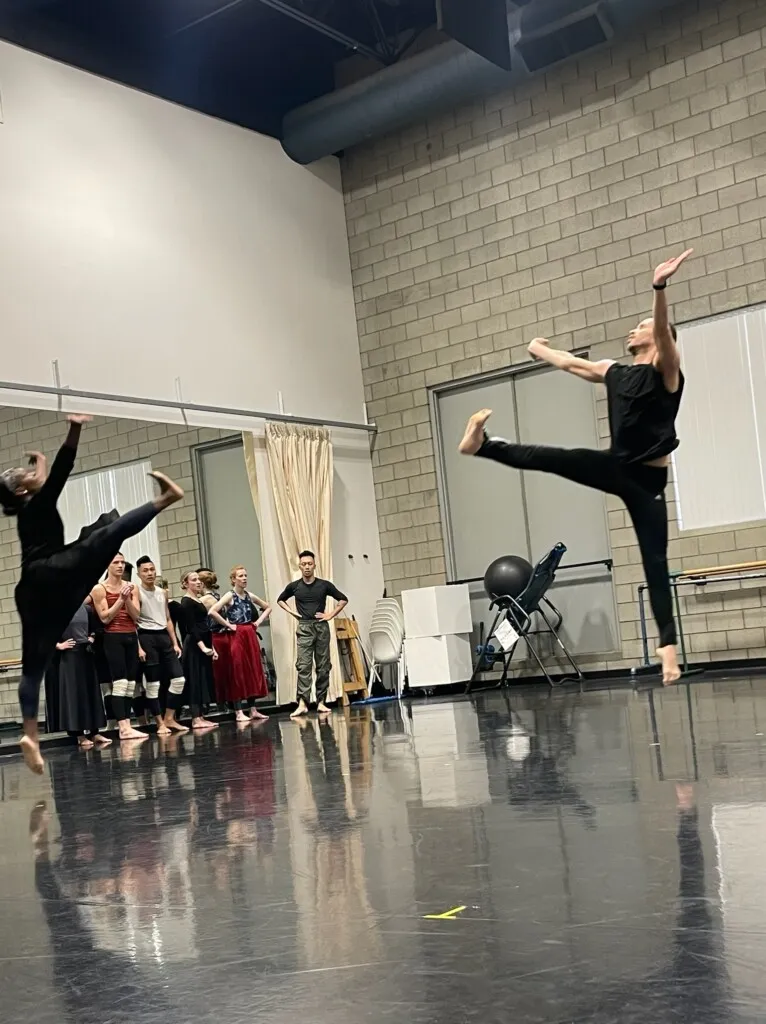
Choreography is, at its core, a spatial art. A dancer does not simply move through time; she moves through space shared with witnesses. The peripheral vision of a seated audience member picks up information that no single camera angle can replicate—the tremor in a supporting leg, the micro-expression that flashes across a face before the grand gesture arrives, the way another dancer's stillness in the upstage corner creates gravitational meaning for the figure at center. Streaming, however sophisticated its production, is an editorial act. Someone has already decided what you will see.
Beyond optics, there is the matter of acoustics. The sound of a pointe shoe striking a Marley floor, the percussive exhale of a contemporary dancer landing a phrase, the near-silence of a company holding collective stillness—these are not merely auditory details. They are kinesthetic cues that invite the audience's nervous system into the performance. Research in social neuroscience has demonstrated that live performance activates mirror neuron responses in ways that screen-mediated performance does not replicate with the same intensity. The body in the audience is, in a measurable sense, participating.
When that participation is removed, something more than atmosphere is lost. The meaning of the work itself can shift.
Accessibility Is Not the Whole Argument
Advocates for digital distribution—and their arguments carry real weight—point out that the live theater experience has never been equally available to all Americans. Ticket prices at major presenting organizations routinely exceed what working-class families can absorb. Major performance centers are concentrated in coastal cities and a handful of inland metropolitan areas. For a first-generation immigrant family in Des Moines or a disabled viewer in rural Tennessee, a high-quality stream may represent the only meaningful point of entry into an art form that has historically signaled cultural exclusivity.
This is a legitimate corrective, and venues that dismiss it risk defending a status quo that has never been equitable. The question, however, is not whether digital access is valuable. It plainly is. The question is whether the theater community is treating streaming as a supplement to live experience or allowing it to quietly substitute for the institutional investment required to make live performance genuinely accessible to more Americans.
Those are categorically different projects.
The Venue's Evolving Responsibility
Several presenting organizations across the country have begun responding to this tension with a kind of programmatic humility—acknowledging that the live/digital binary may be less useful than a more layered understanding of audience relationship. Some have introduced pre-stream community conversations, pairing digital broadcasts with in-person gatherings at libraries, community centers, and schools where audiences watch together and discuss afterward. Others have developed hybrid ticketing models that use revenue from digital access to subsidize in-person attendance for lower-income patrons.
These approaches share a common instinct: that the goal is not to replicate the theater experience on a screen, but to use digital tools to draw more people toward the theater itself. The screen, in this framing, becomes an invitation rather than a destination.
There is wisdom in this distinction. A viewer who encounters a digitally streamed excerpt from a contemporary dance company and then purchases a ticket to attend a local performance has been genuinely served by technology. A viewer who streams twelve productions across a calendar year and never enters a theater has consumed dance without experiencing it in its fullest form—and the field has, in some meaningful sense, failed to make the case for its own irreducibility.
When Fragmentation Becomes the Default
The deeper cultural risk is subtler than any single policy debate. When audiences grow accustomed to consuming dance on personal devices—pausing, rewinding, watching in fragments between other tasks—they are developing a relationship with the art form that is fundamentally different from the one the theater was designed to cultivate. Performance, by its nature, demands a particular kind of attention: sustained, undivided, present. That quality of attention is itself a practice, and like any practice, it atrophies without exercise.
American cultural life has already witnessed this dynamic in other performing arts. The decline in sustained concert attendance, the shortening of theatrical runs, the pressure on choreographers to produce work that communicates in compressed time frames—these are not unrelated phenomena. They are symptoms of an attention economy that streaming has accelerated rather than created.
Dance venues that wish to remain culturally vital cannot simply compete with platforms on the platform's own terms. They must articulate, with clarity and conviction, what they offer that no algorithm can curate: the unrepeatable convergence of living bodies, shared space, and communal witness.
Making the Case for Presence
This is, ultimately, an argument the theater must make not through defensiveness but through excellence and invitation. The goal is not to position streaming as an adversary, but to ensure that the singular qualities of live performance are understood—by funders, by educators, by audiences young and old—as genuinely irreplaceable rather than merely traditional.
For the arts community, this means investing in the quality of the live experience with the same seriousness applied to digital outreach. It means designing pre- and post-performance programming that deepens audience relationship to the work. It means pursuing genuine equity in ticket access so that the argument for presence is not undermined by the reality of exclusion.
And it means trusting, as this art form always has, in the power of what happens when movement and witness share the same room—when breath aligns, when meaning is made not on a screen but in the irreducible space between a body and the people gathered to receive it.
That space is what the theater exists to protect. In an era of infinite digital access, protecting it has never been more urgent—or more necessary to articulate.