Beyond the Big Stage: How Community Theaters Are Rewriting Who Gets to Experience Dance
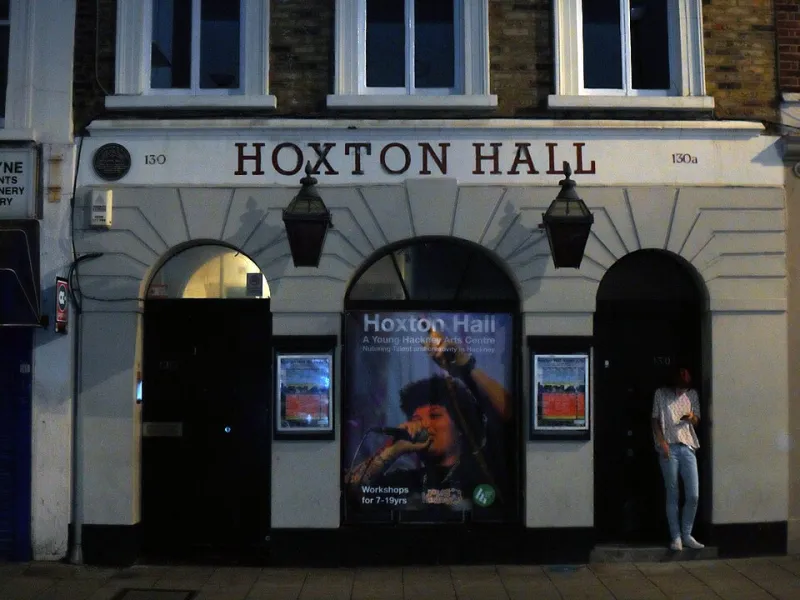
Photo: Spudgun67, CC BY-SA 4.0, via Wikimedia Commons
The image of a grand performing arts center — marble lobbies, tiered seating, ticket prices that rival a car payment — has long served as the dominant symbol of American dance culture. For millions of people living outside New York, Los Angeles, or Chicago, that image has also functioned as a quiet exclusion: a reminder that certain art forms were designed, however unintentionally, for certain kinds of people in certain kinds of places.
That assumption is being challenged with increasing force. Across the country, regional and community-based dance venues are constructing a different model — one in which professional-quality choreography is no longer the exclusive province of major metropolitan centers. The shift is neither accidental nor purely idealistic. It is the product of deliberate economic architecture, unlikely partnerships, and a reimagining of what a theater can mean to the community it inhabits.
The Geography of Exclusion
The disparity in dance access across American geography is well documented, though rarely discussed with the candor it deserves. A family in rural Tennessee or a mid-sized city in the Great Plains may live hours from the nearest venue presenting professional dance. When they do encounter a touring production, ticket prices — often reflecting the cost structures of large urban presenters — can render attendance a financial stretch for working and middle-class households.
This is not simply a matter of preference or cultural priority. Research consistently demonstrates that exposure to live performance in childhood correlates with arts participation throughout adulthood. When access is geographically and economically restricted early in life, the pipeline of future audiences, students, and practitioners narrows accordingly. The consequences accumulate across generations.
Community theaters, long characterized as the scrappy younger siblings of major performing arts institutions, are increasingly positioned as the most effective corrective to this imbalance. Their advantage lies precisely in what has historically been framed as limitation: smaller budgets, tighter spaces, and intimate relationships with the communities they serve.
Economic Models That Prioritize People Over Prestige
The financial architecture of community dance venues looks markedly different from that of their large-scale counterparts. Many operate as nonprofit organizations with diversified revenue streams that reduce dependence on ticket sales — a structural choice with profound implications for pricing. When a significant portion of operating costs is covered through municipal grants, local foundation support, and individual donor cultivation, the pressure to charge market-rate prices for seats diminishes substantially.
Some venues have formalized sliding-scale ticketing, allowing patrons to pay what they can within a stated range. Others have introduced community membership models, in which a modest annual contribution grants unlimited or heavily discounted access to the full season. A number of smaller theaters in the South and Midwest have piloted "pay-it-forward" programs, inviting audiences to purchase additional tickets for community members who might not otherwise attend.
These approaches require careful management and transparent communication with donors, who must understand that subsidized access is a programmatic value rather than a sign of financial distress. When executed with clarity, however, they allow venues to present work of genuine artistic ambition without pricing out the audiences most likely to be transformed by it.
Partnerships as Infrastructure
Perhaps the most consequential development in the community dance landscape is the growing sophistication of institutional partnerships. Venues that once operated in relative isolation are forging alliances with public school systems, community colleges, local businesses, and municipal recreation departments — relationships that extend their reach well beyond the ticketed event.
A theater in a mid-sized Southern city, for instance, might partner with the county school district to bring student matinees into its calendar, ensuring that children from lower-income households encounter live dance performance during school hours, at no cost to their families. The same venue might collaborate with a local university dance program to offer residencies that bring emerging choreographers into the community while providing students with professional mentorship. A partnership with a regional hospital system might fund wellness-oriented movement workshops that draw participants who would never otherwise set foot inside a theater.
Each of these relationships generates something beyond its immediate benefit. They embed the theater into the connective tissue of community life, making it less an occasional destination and more a persistent, trusted presence. That embeddedness, in turn, generates the kind of goodwill and local investment that sustains institutions through difficult funding climates.
The Question of Artistic Quality
A persistent skepticism shadows conversations about community-based presenting: the assumption that accessibility necessarily entails a compromise in artistic rigor. It is a prejudice worth examining directly.
The evidence does not support it. Community venues across the country are presenting work by nationally recognized choreographers, hosting touring productions from respected companies, and commissioning original pieces that speak with specificity to local histories and demographics. The intimacy of smaller spaces often intensifies the audience's relationship with the work, stripping away the architectural grandeur that can, paradoxically, create distance between a performance and those watching it.
Choreographers who have worked in both large institutional and community contexts frequently describe the latter as creatively generative in unexpected ways. The directness of the relationship with the audience — the sense that the people in those seats are genuinely encountering something for the first time, without the context of established cultural consumption habits — can sharpen the communicative ambitions of the work itself.
Redefining the Gatekeeper
The traditional gatekeeping function in American dance — the determination of which work receives visibility, which audiences are imagined as primary, and which communities are considered culturally significant — has resided for most of the past century with a relatively small number of large institutions in a handful of cities. That concentration has shaped the field's aesthetics, its economics, and its demographics in ways that are only now being fully reckoned with.
Community theaters are not simply filling a gap left by major venues. They are proposing a different answer to the question of what dance is for. In their model, the purpose of live performance is not the validation of cultural hierarchy but the cultivation of shared experience across lines of income, geography, and prior exposure. The stage becomes a site of genuine democratic encounter — not in the diluted sense of the word, but in its most demanding one.
This is, ultimately, what the broader arts community stands to gain from the flourishing of community-based dance venues. Not a lesser version of what happens in major metropolitan centers, but a more complete picture of what American dance can be when it is given the space — and the intention — to reach everyone.
The rain does not fall only where the architecture is most impressive. Neither, it turns out, does art.