After the Curtain Falls: How Dance Venues Are Redefining What Belongs to the Audience
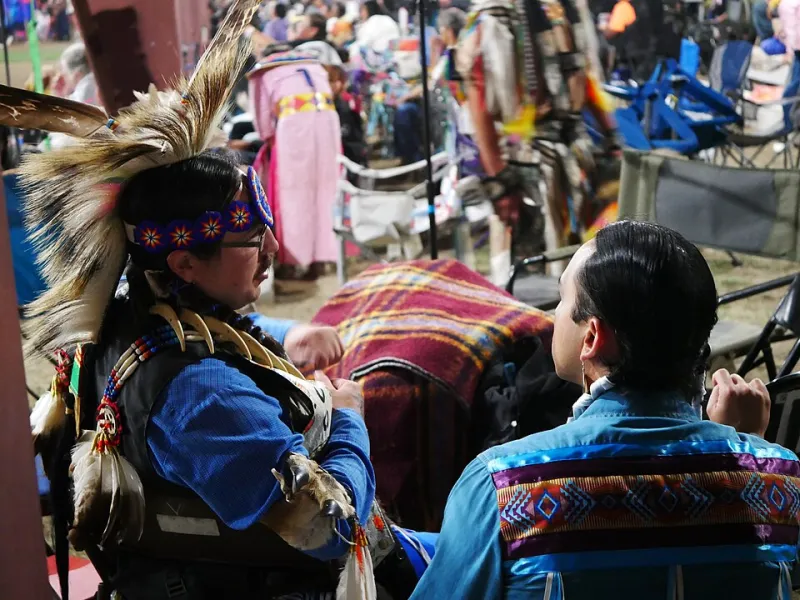
Photo: Thayne Tuason, user name:Biscuitroot, CC BY-SA 4.0, via Wikimedia Commons
The final bow was once understood as a definitive boundary — the moment when art returned to its makers and audiences returned to their lives. Today, a growing number of dance companies across the United States are dismantling that boundary deliberately, constructing richer, more participatory worlds that extend well beyond the theater's closing doors. What emerges from this shift is not merely a longer evening, but a fundamentally different relationship between performance and the people who witness it.
For decades, the performing arts operated on an implicit contract: the stage held meaning, and the audience received it. The transaction was clean, if somewhat uneven. But as American cultural institutions reckon with declining subscription models, shifting demographics, and a public increasingly accustomed to interactive media, that contract is being renegotiated — not out of desperation, but out of genuine artistic ambition.
The Talkback as a Second Stage
Among the most visible expressions of this transformation is the post-show talkback, a format that has evolved considerably from its origins as a modest Q&A session with a choreographer and a microphone stand. At venues ranging from regional repertory companies in the Midwest to major presenting organizations on both coasts, talkbacks are now being designed with the same care given to the performances themselves.
Rather than simply opening the floor to audience questions, thoughtful facilitators are structuring these conversations to draw out the experiential knowledge that audience members carry with them. A piece exploring immigration and displacement, for instance, may be followed by a moderated exchange that invites community members with lived connections to those themes to speak alongside the artists. The performance, in this model, does not conclude — it transforms into dialogue.
This approach acknowledges something that many in the performing arts have long understood intuitively: meaning is not delivered from stage to seat in a single, finished form. It is completed, refined, and sometimes challenged in the space between the artist's intention and the audience's interpretation. When that space is honored and given room to breathe, something genuinely collaborative emerges.
Residencies That Root Artists in Place
Beyond the single evening, a number of dance organizations have begun embedding artists within the communities they serve through extended residency programs. These are not simply rehearsal periods conducted in a new city. At their most ambitious, they involve choreographers, dancers, and teaching artists living within neighborhoods for weeks or months, building relationships that eventually find their way into the work itself.
The Brooklyn-based model of community-embedded residency has been particularly influential, inspiring similar programs in cities like Chicago, Atlanta, and Seattle, where companies have partnered with schools, community centers, and social service organizations to ensure that artistic inquiry reaches well beyond the ticket-buying public. The resulting performances carry a different weight — informed by local histories, local bodies, and local voices that would otherwise remain invisible to the stage.
For presenters, this investment requires patience and resources that are not always easy to justify to boards focused on production metrics. Yet the evidence is mounting that residency-based engagement builds the kind of sustained community investment that single-night performances rarely achieve. Audiences who have met an artist over several weeks, who have perhaps participated in an open rehearsal or a workshop, arrive at the theater carrying a different quality of attention.
Workshops as Artistic Inheritance
The community workshop occupies a distinct and valuable position within this expanding ecosystem. Unlike the talkback, which remains largely verbal, or the residency, which requires extended institutional commitment, the workshop offers participants a physical encounter with the artistic process. To stand in a studio and attempt even a fragment of the movement vocabulary that appeared onstage the previous evening is to understand that work from the inside.
Dance companies have long offered educational programming, of course. What distinguishes the current moment is the degree to which these workshops are being integrated into the artistic vision of a production rather than appended to it as outreach obligations. When a choreographer designs a workshop that reflects the conceptual concerns of the main-stage work — rather than simply teaching basic technique — participants become, in a meaningful sense, co-inhabitants of the artistic world the company has created.
This is particularly significant for audiences who may not have grown up with access to dance training. For many Americans, the stage has historically felt like a space that belongs to others — to those with professional training, cultural capital, or financial resources sufficient to purchase premium seats. Workshops designed with genuine inclusivity in mind begin to erode that perception, replacing it with something far more durable: a sense of personal stake.
The Digital Dimension
No examination of the post-show landscape would be complete without acknowledging the role of digital extension. Streaming archives, behind-the-scenes documentary content, artist interview series, and online discussion platforms have all been deployed by presenting organizations seeking to prolong the life of a production beyond its closing night.
The most sophisticated of these efforts do not simply document what happened onstage. They create parallel experiences — visual essays that illuminate the research behind a work, audio recordings of rehearsal conversations, or interactive platforms that allow audiences to contribute their own responses to specific moments in a piece. The digital and the physical become complementary rather than competing modes of engagement.
There are, of course, legitimate concerns about the limits of screen-based experience when it comes to an art form rooted in the presence of living bodies in shared space. No video archive fully captures the kinetic electricity of a live performance. But digital tools, used with discernment, can serve as bridges — drawing new audiences toward the theater rather than offering them a substitute for it.
A New Architecture of Belonging
What unites these varied approaches — the structured talkback, the embedded residency, the participatory workshop, the digital extension — is a shared conviction that the relationship between a dance company and its community is too important to be confined to a single hour of darkness and light. Movement, at its most powerful, does not end when the dancer leaves the stage. It continues in the body of the witness, in the conversations that follow, in the questions that linger for days afterward.
The most forward-thinking venues in the United States are building institutions that honor this reality. They are designing not just performances but ecosystems — sustained, layered environments in which meaning accumulates over time and through relationship. In doing so, they are not abandoning the primacy of the live performance; they are insisting that it deserves more than a single evening's attention.
For those who believe that dance holds something essential about human experience — something irreplaceable and necessary — this expansion of the post-show moment is not a commercial strategy. It is an act of faith in the audience, and in the enduring power of movement to mean something long after the curtain has fallen.