When Sorrow Finds a Stage: The Rise of Mourning as a Communal Art Form
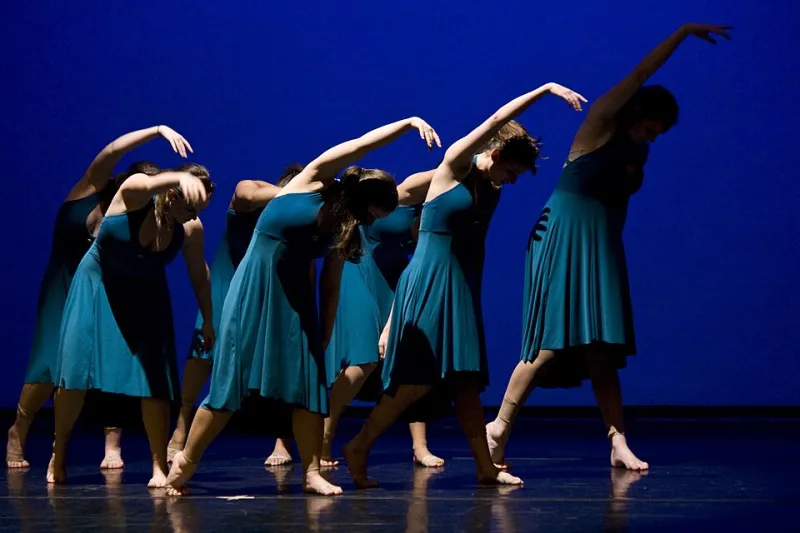
Photo: Michael Muccioli from Bel Air, United States, CC BY-SA 2.0, via Wikimedia Commons
There is a particular silence that settles over an audience when a performance refuses to entertain and insists, instead, on bearing witness. It is not the silence of discomfort, nor the polite hush of a crowd awaiting applause. It is something older and more fundamental—the silence of people recognizing, perhaps for the first time in months or years, that they are not alone in what they carry.
This is the silence that contemporary dance companies across the United States are learning to cultivate deliberately. In an era marked by pandemic loss, racial reckoning, environmental anxiety, and an almost chronic sense of societal fracture, a growing number of choreographers and artistic directors are turning the stage into something it has not traditionally been asked to be: a container for collective grief.
A Culture Ill-Equipped for Public Mourning
American culture has long maintained an uneasy relationship with grief. Efficiency is prized; resilience is celebrated; the expectation to recover quickly from loss—personal or communal—is embedded in everything from workplace bereavement policies to the cadence of national news cycles. Public mourning, when it does occur, tends to be brief, ceremonial, and carefully choreographed in the political rather than the artistic sense.
What is conspicuously absent is ritual. Many societies have long-standing traditions that allow communities to grieve together over extended periods, with structured movement, sound, and witness at their center. In the contemporary United States, those traditions have largely eroded, leaving individuals to process enormous collective losses in isolation.
Dance theater, it turns out, may be one of the few remaining spaces capable of filling that void.
The Stage as Sacred Container
Several American dance companies have moved with notable intentionality into this territory over the past several years. Productions conceived in the aftermath of the COVID-19 pandemic—which claimed more than one million American lives—began appearing in regional theaters and black-box venues that had themselves survived the silence of forced closure. These works did not merely reference loss; they structured the audience's experience around it.
Choreographers working in this mode speak of creating what some have called a "held space"—an environment in which the usual social prohibitions against visible grief are gently suspended. Lighting design plays a significant role, with many productions favoring low, warm luminance that dissolves the sharp boundary between performer and witness. Sound design frequently incorporates breath, silence, and ambient texture rather than conventional musical scoring, encouraging audiences to become aware of their own respiratory rhythms and, by extension, those of the bodies around them.
The movement itself tends toward the deliberate and the accumulative. Gestures are often repeated with slight variations, building meaning through iteration rather than dramatic climax. This structural choice mirrors the actual experience of grief—not a single overwhelming event, but a recurring, evolving presence that changes subtly each time it surfaces.
Witnessing as Participation
One of the more radical propositions embedded in this emerging form is the idea that watching constitutes a form of active participation. Traditional theatrical convention positions the audience as passive receivers of a performance. The choreography of mourning, however, operates on a different premise: that the act of witnessing grief, in the presence of others who are also witnessing it, is itself a form of communal healing.
This concept draws on both performance theory and psychological research. Studies in the field of social neuroscience have demonstrated that shared emotional experiences—particularly those involving synchronized physical presence—activate neural pathways associated with empathy and social bonding. When an audience watches a dancer embody grief, the mirror neuron system generates a somatic echo in the viewer's own body. The emotion is not merely observed; it is, in some measurable sense, felt.
Dance companies working in this space are increasingly aware of this dynamic and are designing their productions to amplify it. Post-performance gatherings, facilitated conversations, and even structured movement invitations for audience members have become more common, extending the experience beyond the boundary of the stage and into the social fabric of the gathering itself.
Grief Across Difference
Not all grief is identical, and the most thoughtful work in this area resists the temptation to universalize loss in ways that flatten its specificity. Companies rooted in particular cultural communities—African American, Latinx, Indigenous, immigrant—have created works that honor the distinct textures of communal mourning within those traditions while simultaneously opening a door for audiences who may be encountering those traditions for the first time.
This dual function is one of the most powerful aspects of dance theater as a vehicle for collective grief: it can hold specificity and universality in productive tension. A work mourning the particular losses of the Great Migration, or the particular grief of families separated at borders, speaks with precision to those who have lived those experiences. And yet the body in grief—the curved spine, the reaching hand, the weight that seems to press the dancer toward the earth—communicates something that crosses cultural lines without erasing them.
For American audiences navigating an increasingly fractured public discourse, this capacity feels not merely artistically significant but socially necessary.
The Theater as Threshold
There is an architectural metaphor that recurs in conversations with choreographers working in this tradition: the threshold. The theater, in this conception, is not a destination but a crossing point—a space one enters carrying the accumulated weight of private and public grief and exits having, in some way, set a portion of that weight down in the company of others.
This is not therapy, and the distinction matters. Dance companies are not clinical practitioners, and the experiences they create are not treatment protocols. What they offer is something different and, in its own way, equally essential: the permission to feel, the structure to contain that feeling, and the presence of other human beings as witnesses and fellow travelers.
In a nation that has endured so much in so compressed a period of time—loss of life, loss of certainty, loss of shared narrative—the emergence of mourning as a legitimate choreographic subject represents something worth attending to carefully. It suggests that artists are, as they so often have been, ahead of the culture in identifying what the culture most urgently needs.
The rain does not ask permission to fall. It simply finds every open space and fills it. The best of this work operates on a similar principle: it moves into the emotional terrain that public life leaves unaddressed and, with patience and precision, makes something luminous of what was left in the dark.