From the Feed to the Stage: How a New Generation Is Rewriting the Rules of Dance
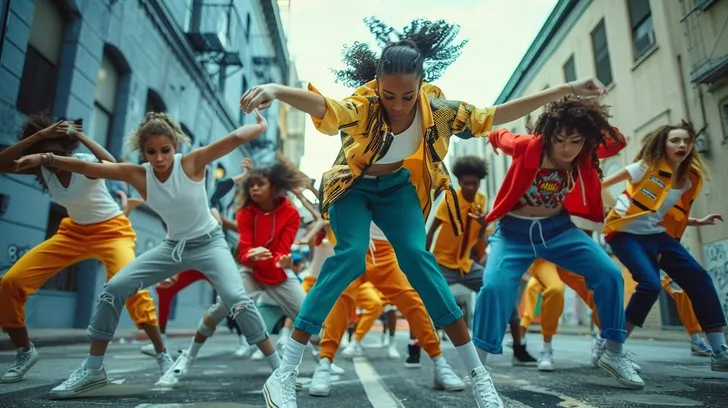
Photo: young dancer performing in urban setting with phone social media, via images.stockcake.com
For most of the twentieth century, the path into professional dance was narrow, deliberate, and unforgiving. It ran through conservatories, regional companies, and the quiet authority of artistic directors who held the keys to legitimacy. To be recognized as a real dancer meant surviving an institution — and the institution, more often than not, decided who was worthy of survival.
That architecture is under significant pressure today, and the force reshaping it fits in the palm of a hand.
The Platform as Proscenium
TikTok alone hosts billions of dance-related videos, with creators accumulating followings that rival — and frequently exceed — those of established performing arts organizations. A nineteen-year-old in Akron, Ohio can now reach more viewers in a single afternoon than a mid-sized regional theater company might attract across an entire season. This is not a trivial observation. It represents a structural inversion of the traditional relationship between performer, institution, and audience.
Gen Z choreographers have not simply migrated onto these platforms out of convenience. Many of them have built coherent artistic identities there — developing signature movement vocabularies, cultivating loyal communities, and generating income streams that would have been unimaginable to previous generations of emerging artists. Creators like Keara Wilson, whose "Savage" choreography became a cultural phenomenon in 2020, demonstrated that viral movement could carry genuine artistic weight, spark cultural conversation, and travel across communities in ways that formal productions rarely achieve.
The question worth asking is not whether these performers are talented. Observation makes that answer self-evident. The more pressing question is what the performing arts establishment chooses to do with that talent — and whether it is capable of honest self-examination in the process.
Gatekeeping and Its Discontents
Traditional dance institutions have long operated on a model of scarcity. Acceptance into a prestigious company or training program conferred value precisely because access was restricted. The audition was not merely a practical mechanism; it was a ritual of legitimacy, a formal declaration that a body had been evaluated and found worthy by those with the authority to judge.
Gen Z has, largely, declined to wait for that declaration.
This is not to suggest that formal training has lost its value — technique, musicality, and physical discipline remain foundational to performance at the highest levels. But the generation now entering adulthood has grown up watching the credentialing apparatus fail to reflect the full breadth of human movement. Hip-hop, waacking, vogue, and krump — forms with deep cultural roots in Black and LGBTQ+ communities — spent decades being celebrated in viral videos while being largely excluded from institutional programming. The internet did not create these forms, but it did make their exclusion impossible to ignore.
Some institutions have responded thoughtfully. The Alvin Ailey American Dance Theater, long a standard-bearer for centering Black artistic expression in formal performance, has actively engaged with digital platforms as both an outreach tool and a site of genuine artistic exchange. Others have been slower to adapt, treating social media as a marketing channel rather than a creative ecosystem worthy of serious consideration.
What Viral Choreography Actually Teaches Us
Critics of the digital dance landscape often raise the concern of dilution — the worry that reducing choreography to a fifteen-second loop flattens the complexity that makes dance meaningful as an art form. This is a legitimate concern, and it deserves a fair hearing rather than dismissal.
But it is also worth examining what the viral format has proven capable of communicating. At its most effective, short-form choreography functions as a kind of concentrated movement poetry. The constraint of brevity demands precision. Every gesture must carry weight because there is no time for anything superfluous. Choreographers working in this format have developed sophisticated skills in visual storytelling, rhythmic layering, and spatial composition — skills that translate directly to the concert stage.
Moreover, the participatory nature of platform choreography — the duet structure, the invitation to replicate and reinterpret — has introduced millions of people to the physical experience of learning movement. That is not a small thing. Dance education in American public schools has been systematically underfunded for decades, leaving entire generations without meaningful exposure to movement as an art form. TikTok, for all its algorithmic opacity, has partially filled that gap.
The Institutions That Are Listening
Several American dance organizations have begun experimenting with programming that acknowledges the cultural legitimacy of digital choreography. The Jacob's Pillow Dance Festival, one of the nation's oldest and most respected presenting organizations, has incorporated discussions of digital performance culture into its educational programming. Some university dance departments have begun formally studying viral choreography as a genre with its own aesthetic conventions and cultural significance.
These are encouraging developments, though they remain the exception rather than the rule. The more transformative shift may come not from institutions adapting to Gen Z artists, but from Gen Z artists eventually occupying positions of institutional authority themselves — bringing with them a fundamentally different understanding of where dance lives and who it belongs to.
A Conversation, Not a Verdict
The tension between digital performance culture and the concert stage is not a problem awaiting a solution. It is a productive friction — the kind that has always driven artistic evolution forward. Jazz was once considered a degradation of serious music. Street dance was once dismissed as unworthy of the theater. The performing arts have a long history of expanding to accommodate what they initially refused to recognize.
What Gen Z is demanding, ultimately, is not the abolition of standards. It is the honest acknowledgment that standards are always constructed by someone, for someone, and that the question of who holds that authority is itself a cultural and political question worth examining openly.
At Raiin Dance Theater, we believe that movement becomes meaning not through the gatekeeping of any single institution, but through the ongoing, sometimes contentious conversation between tradition and emergence. The stage has always been larger than those who claimed to own it. What we are witnessing now is simply the latest generation making that truth impossible to ignore.