Gestures of Resistance: How Choreographers Are Writing Cultural History Through the Body
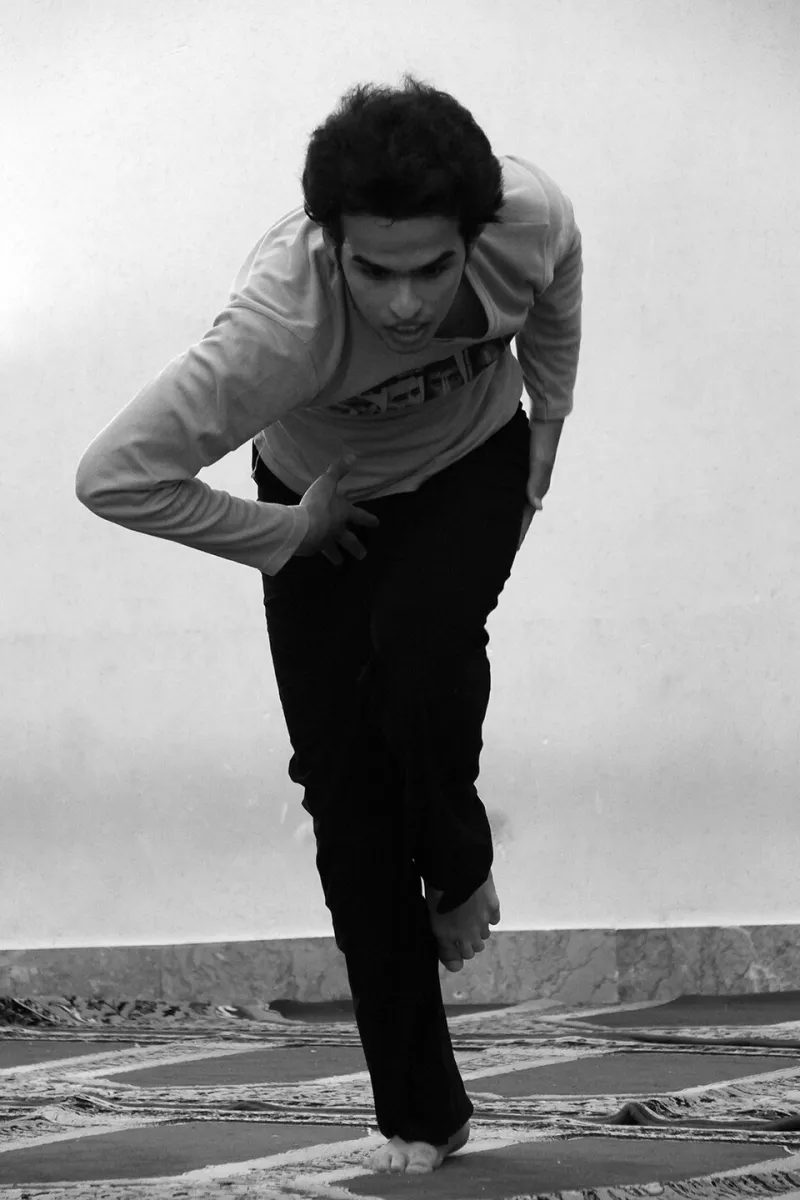
Photo: Mostafameraji, CC0, via Wikimedia Commons
The Grammar Beneath the Steps
Every choreographer operates within a language. Not the spoken kind, though language certainly informs it, but a grammar of the body — a system of gestures, weight transfers, rhythmic emphases, and spatial relationships that, taken together, communicate something that words cannot fully contain. For much of American concert dance history, the dominant dialect of that language was European in origin: rooted in the upright spinal column of classical ballet, the introspective reach of early modern dance, or the cool formalism of mid-century postmodernism.
What is happening in studios and on stages across the United States today represents something meaningfully different. A cohort of choreographers — working in communities from Houston to Detroit, from the South Bronx to South Los Angeles — is constructing movement vocabularies with extraordinary intentionality. Each choice of gesture is also a choice about whose body matters, whose history is legible, and whose cultural inheritance deserves to be witnessed by an audience.
To attend a performance shaped by this sensibility is to understand, perhaps for the first time, that the body onstage is always already a cultural document.
Reclaiming the Weight
One of the most immediately visible distinctions between Eurocentric concert dance and the choreographic languages being built by artists working within African American, Latinx, Indigenous, and Asian American traditions is the treatment of gravity itself.
Where classical ballet aspires toward the illusion of weightlessness — the ballerina en pointe, the male dancer suspended in a grand jeté — many contemporary choreographers are making a deliberate choice to be heavy. The pelvis drops. The knees bend. The feet press into the floor rather than pushing away from it. This is not a failure of training; it is a philosophical statement.
For choreographers drawing on West African dance traditions, this groundedness carries specific cultural weight. The earth is not something to escape but something to commune with. To flatten that quality in service of a more "universally legible" aesthetic — as generations of Black dancers were encouraged to do in order to succeed in mainstream institutions — is to erase a theology of the body that has been transmitted across centuries and across the Atlantic.
Similarly, choreographers working within Indigenous movement traditions have spoken at length about the significance of specific foot patterns, directional orientations, and the relationship of the body to the cardinal points. These are not decorative choices. They are cosmological ones. When such elements appear in a contemporary theatrical production, the stage becomes something closer to a ceremonial space — a site where cultural continuity is not merely represented but actively enacted.
The Politics of Gesture
If the treatment of weight speaks to a worldview, the individual gesture speaks to history — often a history that has been suppressed, distorted, or simply ignored.
Consider the recurring appearance in contemporary Latinx dance theater of gestures drawn from domestic labor: the wringing of a cloth, the sweeping arc of a mop, the precise folding of linens. In isolation, these movements might read as mundane. Within the context of a choreographic work that places them in formal theatrical space, elevates them through musicality and repetition, and surrounds them with the full apparatus of theatrical attention, they become something else entirely. They become testimony.
The choreographer's act of borrowing from the vernacular — from the church, the kitchen, the street corner, the quinceañera — and transporting those gestures into the concert hall is a form of cultural reclamation. It insists that the aesthetic traditions of working-class and immigrant communities are not raw material to be refined by institutional gatekeepers but complete artistic languages in their own right.
This insistence has not always been welcomed. The history of American concert dance is, in significant part, a history of these negotiations: which bodies were permitted onstage, which movement qualities were deemed sufficiently "artistic," and who held the authority to make those determinations. The choreographers working today in this vein are not naive about that history. They are, in many cases, explicitly responding to it.
Rhythm as Argument
Perhaps no element of movement vocabulary carries more cultural specificity than rhythm. The way a choreographer structures time — the placement of accents, the relationship between movement and musical pulse, the use of silence and stillness — reflects deep cultural assumptions about how the body relates to sound and community.
In many African American performance traditions, the body does not simply follow the music; it enters into a conversation with it. The dancer may land slightly behind the beat, creating a sensation of luxurious suspension, or anticipate it, generating a quality of urgency. This is not imprecision. It is a sophisticated rhythmic practice with its own internal logic, one that has profoundly shaped American popular music and yet has frequently been stripped of its cultural attribution when absorbed into mainstream dance aesthetics.
Choreographers who insist on working within this rhythmic tradition — and who train their dancers to feel its distinctions from the inside rather than simply approximate its surface — are preserving something that cannot be notated in a conventional score. They are transmitting a sensibility, a way of inhabiting time that is inseparable from the communities that developed it.
Spatial Relationships and the Architecture of Power
Who stands at the center of the stage, and who occupies its periphery? Who faces the audience directly, and who is turned away? These questions of spatial architecture are not incidental to a choreographic work — they are among its primary arguments.
Some of the most compelling contemporary American dance theater has involved a deliberate reorganization of the conventional stage hierarchy. Works that place multiple performers in simultaneous, equally weighted action — refusing to designate a single protagonist for the audience's gaze — make a quiet but insistent claim about collective rather than individual experience. This reflects cultural values that have often been in tension with the Western theatrical tradition's emphasis on the hero, the soloist, the singular virtuosic body.
Other choreographers have experimented with the relationship between performer and audience in ways that challenge the passive spectatorship that proscenium theater tends to encourage. When the spatial contract is renegotiated, the cultural assumptions embedded in that contract become visible — and therefore available for examination.
A Living Archive
What unites all of these choreographic strategies — the treatment of gravity, the reclamation of vernacular gesture, the insistence on rhythmic specificity, the reorganization of theatrical space — is a shared conviction that the body is an archive. It stores what written records omit. It transmits what institutional curricula exclude. It makes present what dominant culture has worked to render absent.
The choreographers engaged in this work are not, for the most part, making programmatic political statements in the conventional sense. They are not staging arguments so much as embodying alternatives. They are demonstrating, with remarkable precision and care, that there are other ways for a human body to move through space — and that those ways carry histories, philosophies, and communities within them.
For audiences willing to attend to that language, the experience is not merely aesthetic. It is, in the fullest sense of the word, educational. To watch a body move in a way shaped by a tradition you have not encountered before is to have your understanding of what a body can mean quietly and permanently expanded.
That expansion is, ultimately, what the best dance theater has always offered. What is distinctive about this moment is the degree to which choreographers are claiming it as a right rather than requesting it as a privilege — and building the vocabularies to make good on that claim, one deliberate gesture at a time.