Passing the Flame: How Choreographers Preserve Living Movement Languages Across Time
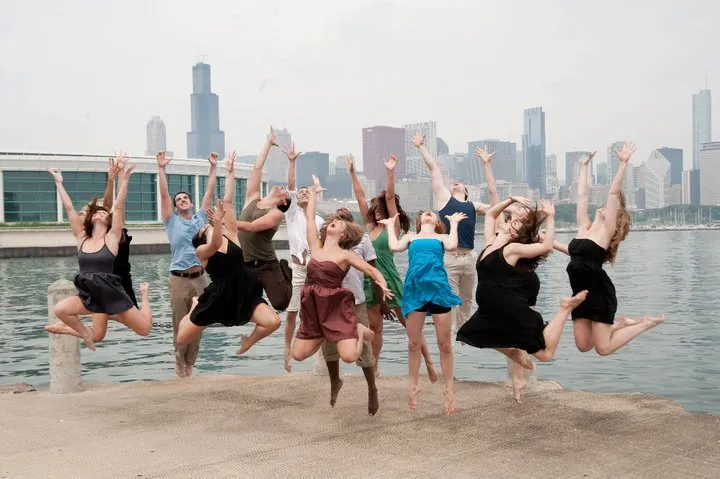
Photo: Inaside09, CC BY-SA 3.0, via Wikimedia Commons
Every choreographer develops a movement vocabulary as singular as a spoken dialect — intricate, embodied, and deeply resistant to reduction. As digital tools promise unprecedented access to dance knowledge, a fundamental question emerges: can the full depth of a movement language ever survive the translation from body to screen, from studio to archive?
The question is not merely academic. Across the American performing arts landscape, established choreographers are confronting the reality that their most essential creative contributions — the gestural signatures, the rhythmic sensibilities, the qualitative textures that define their work — exist primarily in the bodies of the dancers who have trained under them. When those bodies retire, or when a company dissolves, something irreplaceable is at risk of vanishing entirely.
The Notebook That Cannot Be Closed
For generations, choreographers have relied on a patchwork of documentation strategies: Laban notation, Benesh movement notation, handwritten rehearsal notes, and more recently, video recordings. Each method captures something real. None captures everything.
Laban notation, developed in the early twentieth century by Rudolf Laban, remains the most comprehensive written system for recording movement. It can document spatial pathways, timing, and effort qualities with considerable precision. Yet practitioners are the first to acknowledge its limitations. A notation score is a map, not the territory. It tells you where the body travels; it cannot fully convey why, or with what interior quality, or how the movement should feel against the particular resistance of a wooden stage floor.
Video recording, now ubiquitous and essentially free, has democratized access to movement in ways earlier generations could not have imagined. A student in rural Kansas can now study the archival footage of Alvin Ailey's original 1960 production of Revelations with the same ease as a conservatory student in New York. This access is genuinely transformative. And yet, choreographers who have worked extensively with video documentation are often the most candid about what the camera misses: the three-dimensionality of a live body, the atmospheric pressure in a rehearsal room, the specific instruction that unlocks a movement quality in a way no visual record can replicate.
Transmission as a Living Practice
The most durable transmission of movement knowledge has always occurred through direct physical contact — the master class, the rehearsal, the apprenticeship. This is not sentimentality. It is biomechanical reality. Certain qualities of movement are acquired through what neuroscientists call mirror neuron activation, through watching and instinctively mirroring in real time, in a shared physical space. The dancer learns not just what the shape is, but what it costs, what it requires of the body's attention.
Many of the country's most distinguished choreographic voices have developed formal structures to protect and transmit their work. The José Limón Dance Foundation, for instance, maintains rigorous staging programs that train répétiteurs — specialists who carry a choreographer's work in their bodies and can reconstruct it for new casts. The Trisha Brown Dance Company has invested heavily in documentation projects that combine video, oral history, and hands-on coaching. These efforts represent serious institutional commitments to preserving not just the shapes of dances, but the intelligence behind them.
Emerging choreographers are approaching the challenge differently, shaped by a digital environment their predecessors never navigated. Many maintain detailed personal notebooks — physical, handwritten ones — alongside video archives. Some record voice memos during rehearsals, narrating the reasoning behind choreographic choices in real time. Others have begun building what might be called annotated video scores: recordings with layered commentary tracks that explain intention, reference source material, and describe the physical sensations a dancer should be seeking.
The Intellectual Property Dilemma
The democratization of movement knowledge carries a shadow side that the dance community is only beginning to address with adequate seriousness. When a choreographer's signature movement vocabulary becomes freely accessible through social media or unlicensed video uploads, the question of authorship grows complicated.
Unlike a musical composition or a literary text, choreographic work in the United States occupies uncertain legal ground. Copyright protection for choreography does exist under the Copyright Act of 1976, but enforcement is notoriously difficult. A filmed excerpt posted without permission may technically violate copyright, yet the viral dissemination of movement phrases — stripped of context, remixed, reposted — proceeds largely unchecked. For choreographers whose entire artistic identity is built around a distinctive physical language, this represents both a philosophical and a financial vulnerability.
The tension is genuine and not easily resolved. Younger dancers and emerging artists often argue, with some justice, that broader access to movement knowledge accelerates the field's evolution and extends the reach of choreographic traditions that might otherwise remain confined to elite institutions. An aspiring dancer in a city with limited performing arts infrastructure may have no other pathway into a particular movement tradition except through digital access. To restrict that access entirely would be to calcify the very hierarchies that have historically limited who gets to participate in concert dance.
Yet the choreographers who have spent decades building a movement language — who have invested years of physical and intellectual labor into the development of something genuinely original — are not wrong to insist that their work deserves the same protections afforded to other creative disciplines.
What the Body Knows That the Archive Does Not
Perhaps the most honest conclusion is also the most uncomfortable one: no archival system, however sophisticated, will ever fully substitute for the chain of embodied transmission that has always been dance's primary mode of survival.
This does not mean documentation is futile. It means documentation is most valuable when understood as a complement to living transmission rather than a replacement for it. The notebook, the video score, the notation manuscript — these are aids to memory, prompts for the body, bridges across time. They are most powerful in the hands of someone who has also spent time in a room with a teacher who carries the knowledge in their bones.
The performing arts have always understood, at some level, that their most essential knowledge is perishable. A theater company closes; a generation of dancers retires; a choreographer passes away before their work is fully documented. What survives is what was passed, body to body, in the ordinary miracle of a rehearsal. The challenge for American dance in this digital moment is to honor the new tools without mistaking their convenience for completeness — to preserve the flame, not merely its photograph.