Always Ready, Rarely Seen: The Hidden Discipline of the Understudy in American Dance Theater
The Role That Exists in Waiting
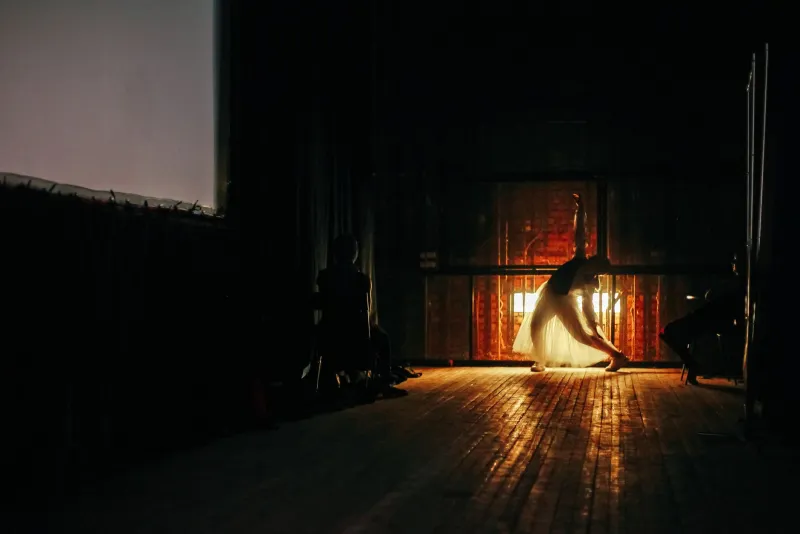
There is a particular kind of dancer who arrives at the theater every night with a costume that may never leave its hanger. She has memorized every count, every spatial pathway, every emotional arc of a role she did not originate. She has rehearsed the partnering lifts with a different body than the one she will likely perform alongside. She knows the lighting cues, the musical phrasing, the director's preferred eyeline in the second act. And she waits.
The understudy dancer is one of American theater's most quietly extraordinary figures — a performer whose entire professional identity is built around a form of readiness that the audience rarely witnesses and the industry seldom celebrates. Yet without these individuals, no major dance theater production could sustain its run, and the art form itself would be far more fragile than it appears from the front of the house.
Understanding what it actually requires to inhabit this role — technically, psychologically, and emotionally — reveals something profound about the nature of performance itself.
Mastery Without Momentum
In most disciplines, expertise is reinforced through repetition in context. A surgeon performs procedures. An attorney tries cases. A principal dancer performs to audiences, night after night, refining and deepening their interpretation through the irreplaceable feedback loop of live performance. The understudy is denied this engine of growth.
Instead, what the understudy develops is something rarer: the capacity to hold a performance in a state of perpetual readiness without the reinforcement of delivery. Neuroscientists who study motor learning describe this as a form of "offline consolidation" — the brain's ability to encode and preserve complex movement sequences during periods of non-execution. For understudy dancers, this process must be not only maintained but actively cultivated, often through visualization practices, shadow rehearsals, and what some performers describe as a kind of internal performance they conduct entirely within the imagination.
At regional companies across the country — from mid-sized repertory theaters in the Pacific Northwest to civic dance organizations throughout the mid-Atlantic — artistic directors have begun to recognize that this cognitive skill set deserves formal attention. Some companies now incorporate dedicated understudy rehearsal structures that treat preparation not as a logistical necessity but as an artistic practice in its own right.
The Psychology of Perpetual Standby
The emotional landscape of the understudy role is one that few outside the profession fully appreciate. It requires a dancer to sustain genuine artistic investment in a role while simultaneously releasing attachment to the outcome of performing it. This is not a passive acceptance of circumstance. It is an active and demanding psychological discipline.
Dancers who have occupied this position for extended periods describe a process of internal negotiation that evolves over time. Early in a rehearsal period, the proximity to the principal role can feel motivating — the possibility of performance feels real and near. As weeks become months, and the principal remains healthy and present, that proximity can shift into something more complex: a kind of sustained ambiguity that requires the understudy to continuously recommit to their preparation without the confirmation of a performance date.
The moment that changes everything — the phone call, the message backstage, the stage manager's quiet word — arrives with a particular quality that dancers who have experienced it describe in remarkably consistent terms. There is clarity. There is a narrowing of attention. The months of preparation collapse into a single, present-tense reality. One dancer who stepped into a lead role at a prominent regional theater on fewer than four hours' notice described the experience as "the strange peace of finally having only one thing to do."
When the Moment Arrives
The transition from understudy to performer is not merely a logistical substitution. It is a profound artistic event, and how dance theaters manage that transition reveals much about their institutional values.
The most thoughtful companies treat the understudy's debut not as an emergency measure but as a performance in its own right — one that deserves the same technical and emotional support as any other night. This means ensuring that the understudy has had meaningful stage time during technical rehearsals, that the production team is fully briefed and prepared to support them, and that the performance is understood by all parties as a legitimate artistic contribution rather than a contingency.
What emerges from this approach, when it is executed well, is often something unexpected. The understudy, having observed the role from the outside for so long, frequently brings a quality of intentionality to their performance that differs meaningfully from the principal's interpretation. They have studied the choreography as an audience might study a painting — with the perspective of distance, noticing relationships between elements that the originating performer, immersed in the experience from within, may not have perceived in the same way.
This is not to suggest that the understudy's performance is superior. It is to suggest that it is genuinely different, and that this difference has artistic value.
Rethinking Value in the Ensemble
American dance theater has historically structured its hierarchies around visibility. The principal dancer receives the role, the recognition, the critical attention, and the institutional investment. The understudy receives the training and the contingency. This arrangement has practical logic, but it carries a cost: it systematically undervalues a form of artistic preparation that is, in many respects, more demanding than the work it supports.
A growing number of companies are beginning to challenge this structure, not by eliminating the distinction between principal and understudy, but by reconsidering how the understudy's contribution is acknowledged, compensated, and developed. Some organizations have introduced what might be called "featured understudy" performances — scheduled opportunities for backup performers to take the stage in their prepared roles, not as emergency substitutions but as planned artistic events. These performances have, in several documented cases, introduced audiences to dancers who subsequently developed significant independent careers.
Community and civic theaters, which have always operated with leaner resources and more permeable hierarchies, have in some ways led this reconsideration. When a company cannot afford the strict separation between principal and understudy, it creates structures in which all performers are expected to know all roles — a practice that, while born of necessity, produces ensembles of extraordinary versatility.
Preparation as Its Own Performance
There is a philosophical argument, one that the understudy's experience makes unusually vivid, that preparation is not merely the means to performance but is itself a form of artistic practice. The dancer who has spent six months holding a role in readiness has engaged with that choreography in ways that no single performance could encompass. They have turned it over in their mind at rest, rehearsed it in empty studios at odd hours, inhabited it in imagination during performances they watched from the wings.
This sustained engagement with movement — without the pressure of execution, without the distortion of adrenaline, without the audience's presence reshaping the experience in real time — produces a relationship with the material that is genuinely distinct from anything the performing principal can claim.
At Raiin Dance Theater, where the belief that movement carries meaning extends to every corner of the theatrical process, this dimension of understudy work feels particularly resonant. The dancer who waits in readiness is not waiting for meaning to arrive. They are, in their own way, already making it — in the quiet, invisible, essential labor of being prepared.