What the Studio Actually Teaches: The Hidden Curriculum Inside Dance Training
The Lesson Beneath the Lesson
Ask a choreographer what they teach, and they will almost certainly describe something far more expansive than footwork. They will speak of timing, yes, and spatial reasoning—but also of the kind of patience that only emerges when you have fallen out of a turn for the forty-seventh time and chosen, without being asked, to try a forty-eighth. This is the hidden curriculum of dance training: a body of knowledge that accumulates in the muscles and the mind simultaneously, shaping the person long after the rehearsal ends.
At Raiin Dance Theater, where movement has always been understood as a form of meaning-making, this conversation feels especially urgent. The performing arts community in the United States is navigating a moment in which the value of arts education is perpetually contested, budgets are scrutinized, and the question of what dance is for is asked with increasing impatience. What choreographers and dancers are beginning to articulate—with growing precision—is that the studio has always been a classroom, and its graduates have always been carrying something extraordinary into the world.
Resilience as Rehearsal
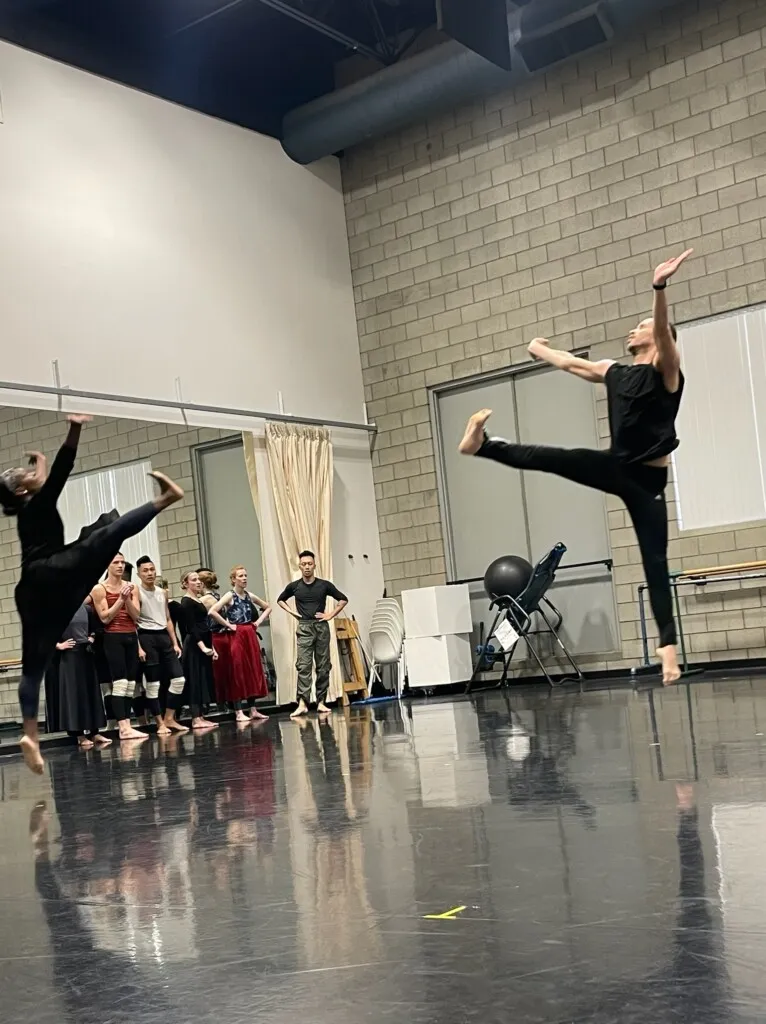
Amara Collins, a choreographer based in Philadelphia who has spent more than two decades working with pre-professional dancers, describes her rehearsal room as a laboratory for what she calls "structured failure." "Every single class, you are asked to do something your body cannot yet do," she explains. "And you are asked to do it in front of other people. That is not incidental to the training—that is the training."
The resilience that emerges from this process is not merely emotional. It is procedural. Dancers learn to assess what went wrong, make a targeted adjustment, and return to the attempt without the kind of paralysis that often accompanies failure in other contexts. Sports psychologists have long studied analogous processes in athletic training, but the performing arts introduce an additional variable: the failure is witnessed, and the recovery must be graceful. Dancers do not simply bounce back—they bounce back beautifully, and that distinction matters enormously when translated into professional environments where composure under pressure is a prized and often scarce quality.
The Architecture of Awareness
Spatial intelligence is another competency that dance cultivates in ways that formal education rarely replicates. Trained dancers develop what neuroscientists describe as an enhanced proprioceptive map—an acute, continuously updated awareness of where their body exists in relation to other bodies, objects, and the dimensions of a given space. In a theatrical context, this manifests as the ability to command a stage. In the broader world, it translates into something that professionals in architecture, surgery, athletics, and emergency response recognize immediately: the capacity to think and move in three dimensions under pressure.
Jordan Whitfield, a former principal dancer who now consults with corporations on team dynamics and physical communication, describes routinely watching executives struggle with the spatial dimensions of a conference room. "They don't know where they are in relation to each other," he says. "Dancers always know. It becomes second nature—reading a room, literally, as a physical environment with its own logic and its own demands."
Emotional Fluency and Collaborative Intelligence
Perhaps the most underappreciated dimension of dance training is its cultivation of emotional intelligence—not as a therapeutic outcome, but as a technical requirement. To perform effectively, a dancer must be able to access, embody, and communicate a precise emotional register on demand, often while managing physical exhaustion, spatial coordination, and musical timing simultaneously. This is not a metaphor for emotional literacy; it is emotional literacy in one of its most demanding forms.
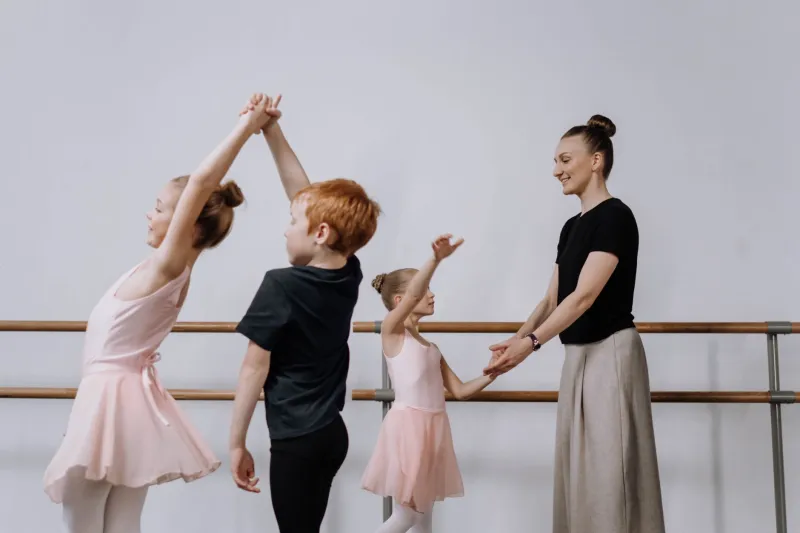
Equally significant is the collaborative intelligence that ensemble work demands. In a company setting, dancers must negotiate shared space, respond instantaneously to the choices of their partners, and subordinate individual impulse to collective coherence—all without a script and often without words. Choreographer Diane Reyes, whose work has appeared at regional theaters from Atlanta to Seattle, argues that this dimension of dance training is its most transferable gift. "My dancers know how to disagree without stopping," she says. "They know how to adjust in real time. They've been doing it since they were twelve. That's not a soft skill—that's a sophisticated form of problem-solving."
Reframing the Conversation in Education
The implications of this hidden curriculum are beginning to surface in educational policy discussions, particularly as school districts across the country continue to debate the role of the arts in a standards-driven environment. Advocates for arts education have long made the case on grounds of cultural enrichment and creative development—arguments that, while valid, have struggled to gain traction in an era of vocational urgency. The emerging argument is more direct: dance training produces measurable competencies in resilience, spatial cognition, emotional regulation, and collaborative problem-solving that are directly relevant to the demands of twenty-first-century professional life.
Several universities, including programs in California and New York, have begun incorporating movement-based learning into leadership development curricula, citing exactly these competencies. Corporate training programs in sectors as varied as healthcare and technology have followed suit, partnering with dance educators to develop workshops that use choreographic principles—improvisation, ensemble responsiveness, physical presence—as frameworks for professional skill-building.
What the Stage Already Knew
For those who have spent their lives inside the studio and on the stage, none of this is particularly surprising. What is new is the language—and the audience. The performing arts community has always understood that a dancer who has spent years navigating the demands of the rehearsal room arrives in the world equipped with something that cannot be easily replicated in a lecture hall or a corporate training seminar. The discipline of moving with intention, of failing publicly and returning with grace, of reading a room and responding to another human being in real time—these are not byproducts of dance training. They are its core.
At Raiin Dance Theater, the belief that movement becomes meaning has always extended beyond the stage. The studio is where that meaning is first made—in the repetition, the correction, the collaboration, and the quiet accumulation of a self that knows how to be present, how to adapt, and how to keep moving. The steps are only the beginning.