Two O'clock Belongs to Everyone: The Quiet Case for the Matinee

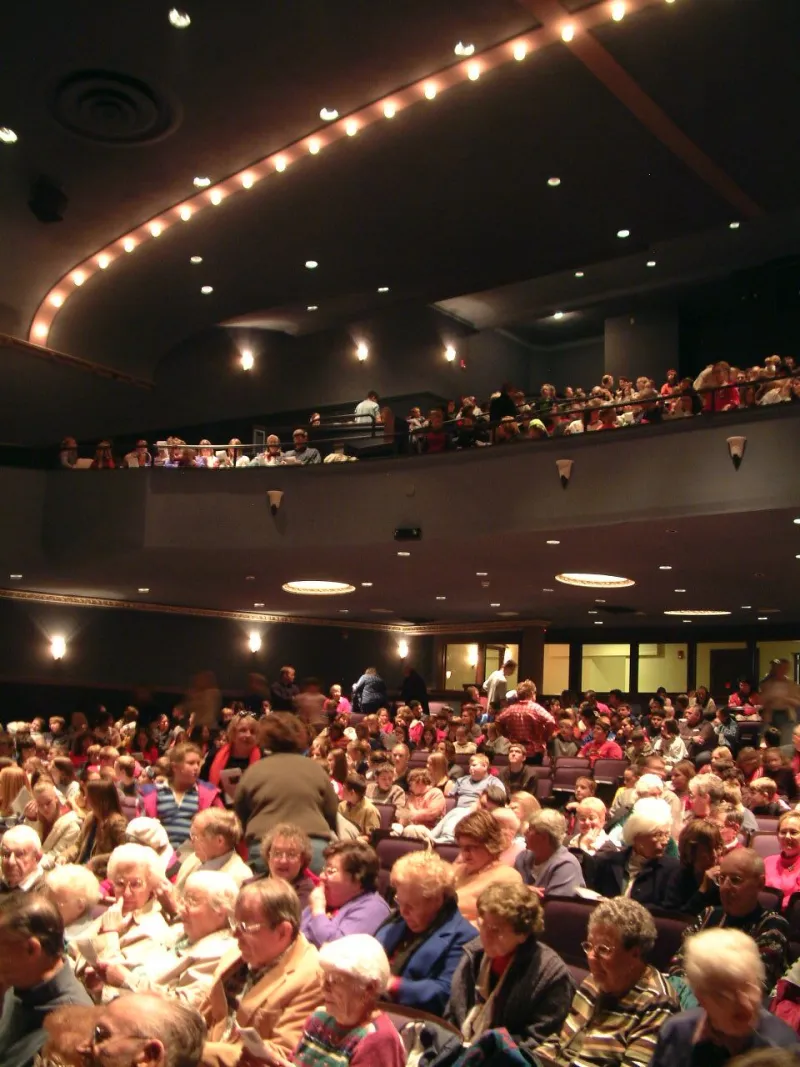
Photo: theater audience matinee afternoon diverse crowd auditorium, via img.freepik.com
There is a snobbery that hangs over the afternoon performance, and it is time someone said so plainly. The matinee — that 2 PM slot booked mostly for tourists, seniors, and school buses — is routinely cast, cast, and lit with less care than its evening counterpart. Understudies appear with suspicious frequency. Program notes are thinner. The unspoken message to the matinee audience: you are getting the B version.
This is a mistake, both artistically and civically. The matinee is not the minor league of American theater and dance. It is the most accessible hour the performing arts have.
Who the Afternoon Serves
Consider who can actually attend a performance at 2 PM. Retirees who no longer drive at night. Parents of young children, for whom an 8 PM curtain means a babysitter costing more than the tickets. Restaurant and hospitality workers — the very people who serve the evening audience — whose only free window is the afternoon. School groups priced out of prime-time subscriptions. Shift workers of every kind.
In other words, the matinee audience is what America actually looks like, while the evening house skews toward those with disposable income and flexible schedules. A theater that treats its matinee as an afterthought is quietly telling half its potential community that their attendance is a lesser form of patronage.
The Case for First-Class Afternoons
Some venues have already figured this out. Several regional dance companies across the Midwest and Pacific Northwest now rotate casting so that principal artists appear in matinees as often as evenings, treating the afternoon as a distinct performance rather than a reduced one. A few theaters in the Twin Cities and the Pacific Northwest have added post-show talkbacks specifically timed for matinee crowds, whose audiences — often freer of evening obligations — stay and engage in numbers the evening houses rarely match.
The economics argue the same direction. An empty matinee seat earns nothing; a matinee programmed with the same ambition as the evening earns exactly what the evening earns. The marginal cost of full casting is trivial compared to the reputational cost of a visibly diluted product.
There is also an argument from habit. Audiences are built, not born. A child introduced to dance at an affordable afternoon performance, sitting beside a grandparent, becomes the subscriber of 2040. Cut the matinee's quality, and you cut the pipeline.
A Modest Proposal
Regional theaters and dance venues should adopt a simple standard: the matinee is a first-class performance, period. Full casting rotation published in advance. Full production values. Programming and pricing designed for the populations the afternoon uniquely serves — family pricing, senior-friendly scheduling, and school partnerships that treat students as patrons rather than field-trip cargo.
The evening performance will always have its romance — the darkened lobby, the hush before an 8 PM curtain. But the 2 PM hour has something the evening can never offer: the widest possible door. The companies that honor it will find that the afternoon crowd was never the second-string audience. It was the future, sitting in the seats all along.