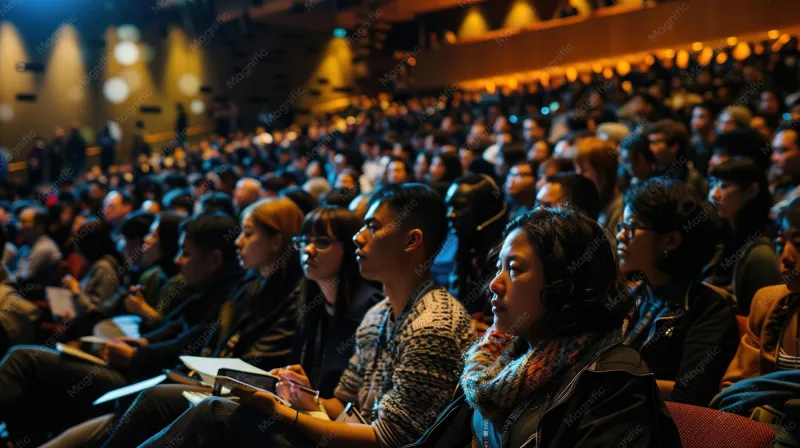
Before the Doors Open: How the American Theater Lobby Became Part of the Show
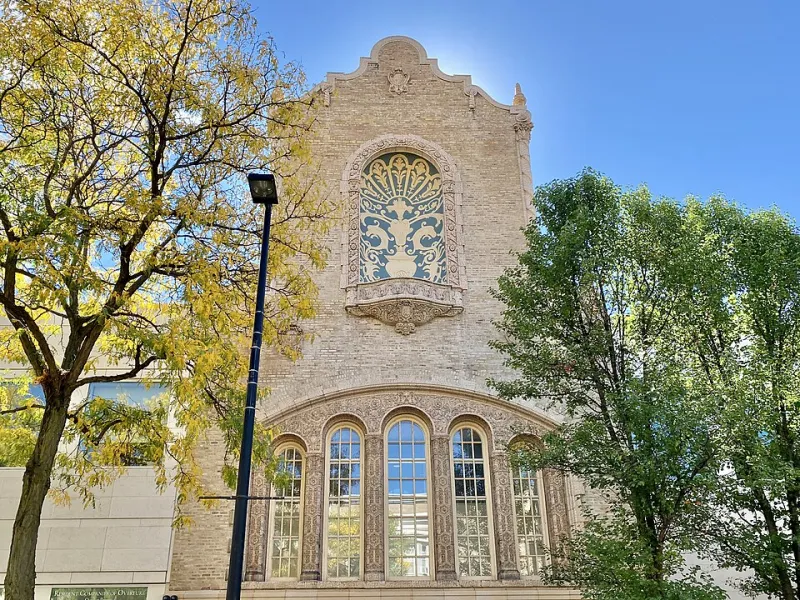
Photo: Warren LeMay from Covington, KY, United States, CC BY-SA 2.0, via Wikimedia Commons
For most of the twentieth century, the American theater lobby was an architectural apology: a narrow strip of carpet between the sidewalk and the seat, furnished with a coat rack, a water fountain of questionable pressure, and a bar that served warm white wine at prices that felt like a second ticket. You passed through it. You did not remember it.
That era is ending. Walk into a well-run dance venue today—whether a 1,800-seat house in Chicago or a converted church in the Pacific Northwest—and you may find a choreographer giving a pre-show talk beside a lobby installation of the actual rehearsal costumes, a bar pouring something local and drinkable, ushers trained to answer the question every first-timer is silently asking: what am I about to see, and am I allowed to react to it?
The lobby, it turns out, was never a waiting room. It was an unfinished stage.
The Arrival Problem
Theater people speak of the "arrival problem" with genuine concern. A patron who battles traffic, circles the block for parking, and sprints through the doors as the house lights blink has arrived at the building but not at the performance. Her pulse is up, her phone is still glowing, her mind is still in the parking garage. She will sit down, but she will not yet be present—and the first ten minutes of choreography will be performed, in effect, to an empty chair.
Venues have begun treating this as a design challenge rather than a scheduling note. The solutions are disarmingly practical: opening doors forty-five minutes early. Programming the lobby the way one programs an overture. Placing the pre-show talk not in a back classroom but in the middle of the crowd, so that attending it feels like joining something rather than taking a class.
The effect compounds. A patron who has heard the choreographer describe the work's central image—a river, a departure, a debt—watches the opening section with a key she would not otherwise possess. The performance begins earlier for her. It simply starts in the lobby.
Lowering the Door, Not Just the Ticket
There is a second, more urgent reason for the transformation: intimidation. American dance has a long-standing perception problem, and much of it accumulates before anyone sits down. The newcomer wonders whether she is dressed correctly, whether she will understand the work, whether applause has rules. A cavernous, impersonal lobby confirms every fear. A warm one dismantles them.
Some companies have made this dismantling explicit. Lobby installations now explain, in plain language, what the audience will see and why it was made. Volunteer greeters—sometimes board members, sometimes company apprentices—roam with the simple mandate of talking to anyone who looks lost. One regional company famously posts a sign at the entrance reading, in effect: There is no wrong way to watch this.
The results show up where it matters. Venues that invest in the arrival report higher first-time return rates, more relaxed houses, and—tellingly—more questions at post-show discussions. The audience that was welcomed, rather than merely admitted, behaves like a participant.
Ritual, Not Retail
Critics of the trend worry about mission creep: is the lobby a community center or a concession stand? The distinction matters. The best of these spaces are not selling anything extra. They are performing an older function that theaters once served without trying—the function of threshold.
Every ritual of collective experience has a liminal zone. The church has a narthex. The stadium has the concourse and the tailgate. The theater had the lobby and forgot to use it. What today's designers are recovering is the understanding that people do not transform into an audience instantly; they cross over gradually, through small acts of shared space—hanging a coat, greeting a neighbor, reading a panel about the rehearsal process, holding a drink and feeling the hum of a room filling with people who came for the same reason.
By the time the house dims, that hum has done quiet work. It has told every person in the room: you belong here, this is yours, and whatever happens onstage belongs to you too.
The Experience Starts Earlier Than You Think
Dance companies compete, in 2024, against an ocean of entertainment delivered without anyone leaving the couch. The live event's irreplaceable asset is not the choreography alone—it is the whole arc of the evening: the crossing of the threshold, the gathering, the held breath, the walk out into the night still talking.
The companies that understand this have stopped asking how to fill the time before the show. They have started asking how to begin it. And the answer, increasingly, is written on the lobby floor—sometimes literally, in the form of taped rehearsal marks and video of the dancers warming up, so that even the ground beneath the ticket-taker's podium feels like part of the work.
The curtain, it turns out, is not the first thing that rises. It never was.